
Lalehzar under Allied Occupation: A Localized Narrative of a Global Conflict
Lalehzar under Allied Occupation: A Localized Narrative of a Global Conflict
Ida Meftahi
The Anglo-Soviet invasion of Iran in 1941 is frequently portrayed as a footnote in the history of World War II, with Iran primarily viewed as a strategic supply route used for transporting ammunition and military equipment to the Soviet Union. However, such telescopic accounts often overlook the crimes committed by Allied troops and the war’s devastating impact on the lives of Iranian civilians. Such crimes included disruptions to the economy and infrastructure, as well as a variety of offenses committed by the troops, such as hit-and-run accidents, theft, vandalism, destruction of public property, assaults on civilians and police, and cases of sexual violence and murder.
Utilizing a feminist and critical urban geopolitics framework,[1] I foreground the everyday effects of World War II occupation in Iran[2] to challenge dominant “scales of geopolitics” through a microlevel examination of the ways occupation affected the lives of Iranians. Focusing on Lalehzar Street and its surroundings in central Tehran, where occupiers and the occupied encountered, exercised, and sometimes contested unequal power dynamics on a daily basis, this analysis illustrates how Lalehzar became a site for both soft power experimentation and geopolitical friction, exposing ordinary civilians to “new form(s) of geopolitical knowledge.”[3] I examine how, despite the 1942 Treaty of Alliance between Iran, Britain, and the Soviet Union, Allied powers pursued a covert capitulation policy that ignored their troops’ criminal conduct. I further highlight the persistent efforts of Iranian authorities, media, and nonstate actors to challenge this complicity and advocate for national sovereignty and citizens’ rights. Lastly, I trace the escalation of Iranian appeals to Washington that were ultimately dismissed amid shifting U.S. policy.
Situated near major national and foreign institutions, mainly on Firdawsi Street (fig. 1), Lalehzar District (fig. 2) offers a compelling site for critical geopolitical analysis. As a location embedded in a wider urban network shaped by both local and international politics, this charged urban space brought foreign diplomats, soldiers, and refugees into daily contact with Iranian citizens, including pedestrians, shopkeepers, the police, artists, and modern youth eager for change.
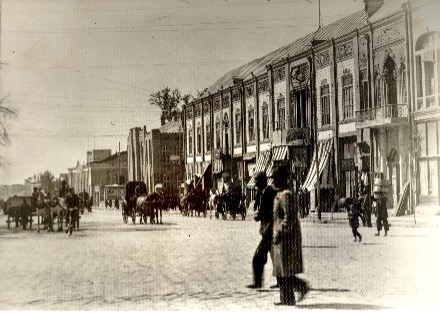
Figure 1. Grand Hotel, Lalehzar Street, ca. 1929–33. Source: Estādux
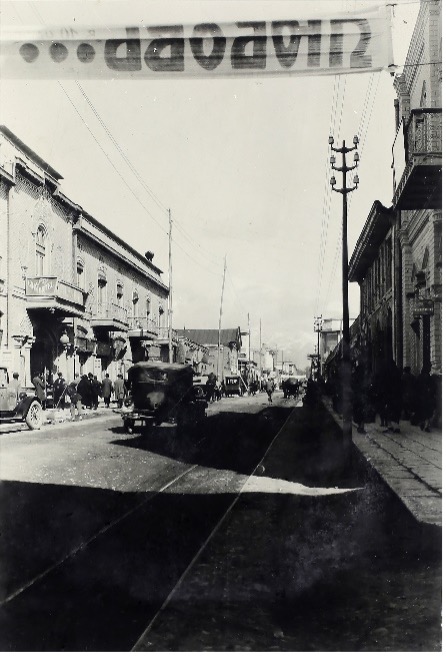
Figure 2. Firdawsi Street, ca. 1935–41. Source: Estādux
The present study focuses on the area I call Tulip Grove,[4] bounded by the U.S. embassy to the north, the Italian and French embassies to the west, the Iranian Parliament to the east (fig. 3), and Sepah Square (fig. 4) to the south. Covering roughly one square kilometer, it takes about five minutes to walk from the French Embassy to Firdawsi Street (see map 1).
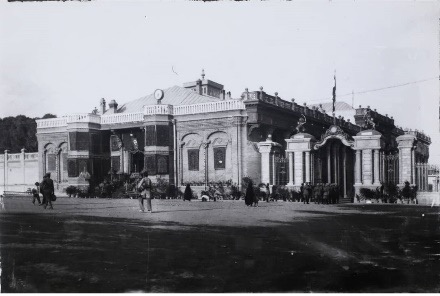
Figure 3. Iranian Parliament, ca. 1933–35. Source: Estādux
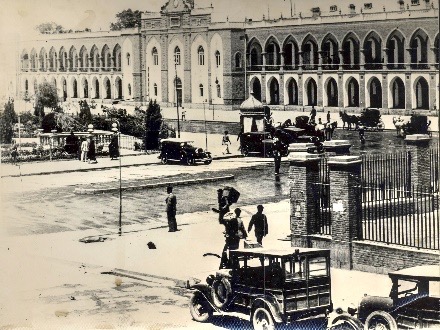
Figure 4. Sepah Square, 1937–41. Source: Estādux
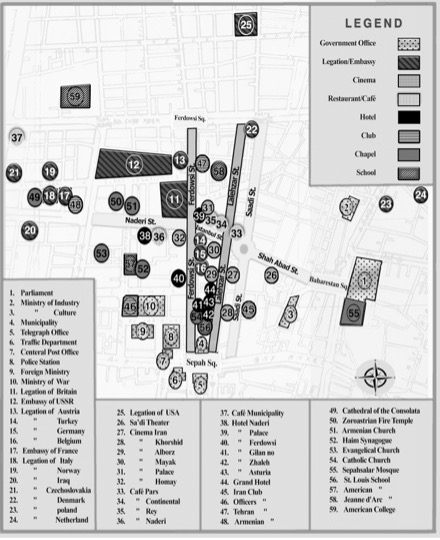
.Map 1
In an effort to forge a new narrative about the impact of war on the lives of Iranian populace, I draw on cross-examination of archival materials from the archives of the Iranian Ministry of Foreign Affairs and of the Majlis, alongside the national archives of Iran, Britain, the United States. I also incorporate historical press coverage and oral history records. Most archival material under analysis pertains to Lalehzar Street, documenting its urban fabric, diplomatic presence, cultural life, sociopolitical activity, artistic output, and leisure spaces during World War II. This detail-oriented, multi-archival approach foregrounds Iranian conditions and responses—drawing on rare Iranian documents—and challenges Eurocentric narratives that portray Iran as a passive object of Allied domination during WWII, rather than as a nation with agency. While the burden of war was more severe in Iran’s Soviet-occupied north and British-controlled south, this study uses Lalehzar as a microcosm of wartime Tehran.
Lalehzar Prior to Allied Invasion: Major Influences
Prior to the Allied occupation of Iran starting in September 1941, Lalehzar was a cosmopolitan district shaped predominantly by influences from France and the northern Russian Empire. French-speaking countries, notably France and Belgium, played a significant role in the area during the Qajar and Pahlavi eras (fig. 5). This influence is reflected in the presence of diplomatic legations and prominent missionary schools like St. Louis and Jeanne d’Arc. Additionally, various enterprises, including fashion boutiques, casinos, and hotels, were largely owned by families of French-speaking experts who had been recruited by the Iranian government. Consequently, France became a central hub for education, culture, and intellectual aspiration among Iranian elites, with French serving as the lingua franca.
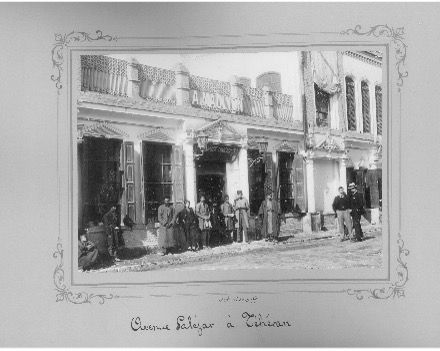
Figure 5. Lalehzar-French influence. Source: Library, Museum and Document Center of Iran Parliament (Majlis)
Historically, the Lalehzar District bore witness to significant Russian presence, characterized not only by its legation but also through the flourishing of businesses, live performances, and cinemas involving Soviet or Russian citizens, migrants, and touring companies. The influence intensified after the 1917 Russian Revolution, when artists and cultural producers from the Caucasus region (Armenia and Georgia) sought refuge in this cosmopolitan zone. Their arrival expanded Lalehzar’s cultural landscape by introducing novel skillsets and facets, significantly shaping the trajectory of Iranian cinema and modern performing arts.[5]
By 1941, Lalehzar increasingly reflected the statist nationalism imposed by Reza Shah’s government. For the first time, the authority of a strong central state was felt in the district. The Tehran municipality, for example, pressured foreign embassies to update the facades of their buildings and improve adjacent sidewalks.[6] This key area of the capital encapsulated the top-down reforms of the first Pahlavi era, including the 1928 men’s sartorial reform (fig. 6), the 1938 ban on foreign “scripts” in public signage, and the establishment of state art institutions intended to cultivate national identity and promote modern ideals.[7] The state’s tight control over the cultural scene has led some historians to describe the period as one of “suffocation.” Among the most consequential reforms of this period was the unveiling of women in 1936 (fig. 7), an effort to integrate them into public life. This policy made women increasingly visible in workplaces, the art scene, and leisure spaces, including on streets, stages, and dance floors.[8]
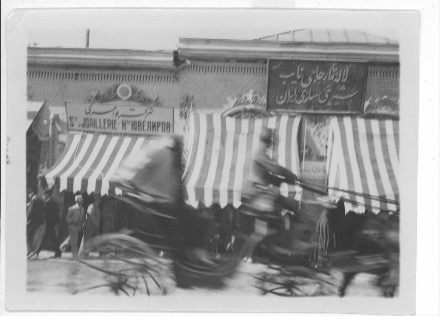
Figure 6. Men in Pahlavi hats. Source: Library, Museum and Document Center of Iran Parliament
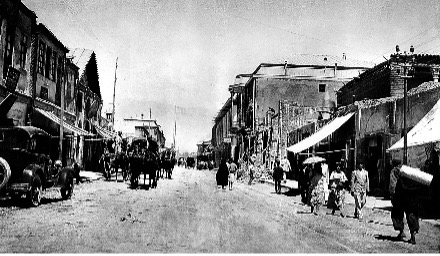
Figure 7. Unveiled women on Lalehzar Street, after 1936 unveiling of women. Source: Markaz-i Asnad va Matbua‘t-i Astan-i Quds-i Razavi
Despite such semblance of sovereignty and order, this small area of Tehran’s Tulip Grove had already become a contested zone between the Allied and Axis forces before the years commonly associated with occupation.
A Prelude to War in the Lalehzar District
In February 1940, the British diplomatic mission, stationed at their legation on Firdawsi Street, was closely monitoring the development of World War II in Iran (see map 2). Apprehensive about the security of British oil interests in the south, officials deliberated possible preventative measures against the growing threat posed by Germany and the Soviet Union.[9] The recently signed German-Soviet nonaggression pact, the two powers’ similar diplomatic maneuvers within Iran, and the implications of the Anglo-Soviet agreement of 1907 created considerable uncertainty about how a joint German-Soviet strategy might unfold in Iran. For British officials posted in the Lalehzar District, the German threat was immediate and palpable: the German legation, with its distinctive Nazi-style architecture, stood directly across the street, alongside the Brown House, Germany’s war propaganda office. British diplomats found themselves surrounded by everything German: German-owned businesses, German-manufactured automobiles, and cinemas screening German films.[10] Intelligence operations were embedded even in the mundane: two local barbershops doubled as covert Nazi surveillance outposts, underscoring the infiltration of German intelligence in Tehran.[11] To many Iranians, however, Germany represented a viable third force capable of offsetting Anglo-Soviet dominance. Germans were often associated with professional expertise, as engineers, doctors, and businessmen active in Iran’s educational, industrial, and medical sectors.[12] For the British, German propaganda had not only persisted since World War I but had also become increasingly effective, reaching Iranian audiences through Persian broadcasts from Radio Berlin.
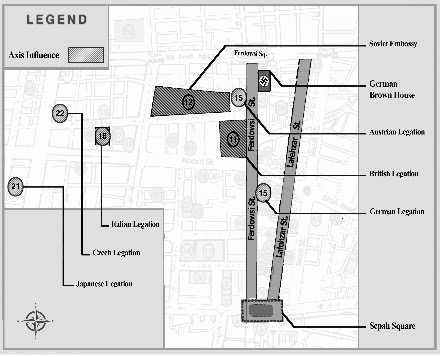
map 2.
In the months leading up to the war, British intelligence in Tehran grew increasingly alarmed by reports of a possible German-backed coup d’état against the increasingly unpopular Reza Shah. The plot was believed to involve access to ammunition through the German-led railway project connecting Tehran to Tabriz.[13] Tensions escalated further after Germany declared war on the Soviet Union, prompting a surge of concern within British diplomatic circles. This escalation was compounded by reports indicating that the German minister had delivered a personal message from Hitler to Reza Shah, offering to protect Iran’s borders in exchange for joining the Axis powers.[14] Soon after, British intelligence learned of a clandestine meeting at the Brown House involving the minister and members of Tehran’s sizable German expatriate community. Attendees were discreetly forewarned of an impending mission and instructed to avoid contact with German Jews or other foreign nationals in the city.[15] For the British, these developments raised an urgent question: were they witnessing the precursor to a coordinated German coup against Reza Shah? By the summer of 1941, Axis diplomats and Iranian politicians continued to gather in legations across the neighborhood. One notable event was a screening of the pro-Axis propaganda film Victory of the West at the German legation on 18 March 1941.[16] Public celebrations of Germany’s victories on the Eastern Front had already extended onto nearby streets, particularly around nearby Sepah Square.[17]
The Anglo-Soviet Invasion
In August 1941, shortly after Germany’s invasion of the Soviet Union, Britain and the USSR launched a joint invasion of Iran, mirroring the strategy they had used during World War I. The country was partitioned into northern and southern territories of occupation (Soviet and British, respectively), with Tehran and the surrounding central region designated as neutral. Despite this nominal neutrality, Allied aircraft patrolled the skies above Tehran, and Russian tanks moved through its streets. Within weeks, Reza Shah was forced to abdicate in favor of his son, Mohamad Reza.
The occupation was formalized by the Treaty of Alliance, signed on January 29, 1942, when Iran agreed to the presence of Allied forces for the sole purpose of moving ammunition and supplies from the Persian Gulf in the south to Soviet territory in the north, thereby bolstering the Eastern Front. The treaty stipulated that this military presence should not be regarded as an occupation and affirmed a commitment to Iran’s sovereignty, territorial integrity, and political independence. Article 4 further stated that a separate agreement would be negotiated with the Soviet Union to minimize disruption to Iran’s economy, security, and domestic governance, including ensuring the free movement of civilians and upholding Iranian law.[18]
The entry of the United States into the war in December 1941 added another layer of complexity. Although not a signatory to the treaty, the U.S. soon deployed troops to Iran under the British command structure, forming the Persian Gulf Command. Initially, their involvement was justified as logistical support for the supply route. But American engagement quickly expanded as the Iranian government began contracting American experts to support domestic reform.[19]
One of the most prominent of these advisors was Arthur Millspaugh, a U.S. State Department official tasked with recognizing Iran’s financial system. Operating from the Ministry of Finance, Millspaugh and his team established offices in Tulip Grove, including the Firdawsi Hotel (fig. 8) and the Grand Hotel on Lalehzar Street.[20] At the same time, U.S. policymakers began to view Iran as a testing ground for the principles outlined in the Atlantic Charter.[21]Framing itself as a third power distinct from British and Soviet imperial interests, the U.S. aimed to protect Iran’s sovereignty and to promote its economic stability, not only during the war, but also in its aftermath.[22]
In accordance to the terms of the treaty, the Allied powers quickly initiated the expulsion of Axis nationals from Iran. The Ministry of Foreign Affairs coordinated with the Axisgovernments to identify and remove diplomats and citizens, arranging for their transit through either the northern or southern zones. The directive was implemented with few exceptions: even personnel with critical technical roles, such as a German publishing official working for the Majlis, were expelled.[23] In Tehran, these departures were often staged outside the Axis legations clustered in Tulip Grove or their seasonal compounds in northern Tehran. Some itineraries included a farewell dinner at the Firdawsi Hotel in January 1942.[24] In tandem with the deportations, the Anglo-Soviet forces arrested several hundred Iranians suspected of sympathizing with Germany. Those detained included members of the political elite, the royal family, and prominent clerics, underscoring the depth of Allied anxiety over internal dissent and foreign influence.[25]
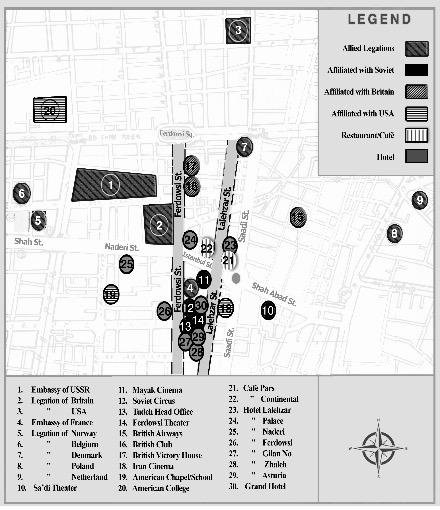
map 3.
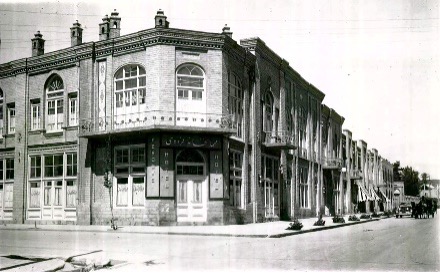
Figure 8. Firdawsi Hotel, under construction, ca. 1935–36. Source: Estādux
Following the Allied occupation, the legations of Italy, Hungary, and Austria were closed, while new embassies were established for Poland and Czechoslovakia (see map 3).[26] Sweden assumed responsibility for representing German interests, and Japan undertook a similar role on behalf of Italy.[27] In response to the seizure and erosion of Axis-owned properties at the borders, a new commission was established under the Ministry of Finance on Firdawsi Street to address property claims.[28] Meanwhile, the Brown House in central Tehran was taken over by the British and repurposed as the Victory House dedicated to Allied wartime propaganda.[29] As early as August 1941, the screening of German films in the Lalehzar District ceased.[30] Cinemas quickly shifted to programming Allied films, reflecting the new political order.
Tensions escalated further on the night of January 24, 1942,[31] when Soviet and British soldiers vandalized the German legation. The incident prompted the Swedish embassy to urge Iranian authorities to tighten security.[32] In turn, Iran’s Ministry of Interior formally requested that the British legation exercise stricter oversight of its troops to maintain public order.[33]
Military Vehicles and the Erosion of Sovereignty
Among the first visible consequences of the Allied occupation was a surge in military vehicle traffic through Tehran, as Iran’s roads and railways became vital arteries for the transport of supplies from the Persian Gulf to the Soviet front. Within weeks, Tehran’s pedestrians not only observed Allied army cars and trucks, but they also regularly collided with them. The increase in traffic accidents marked the start of a fraught and often unequal confrontation between Iran and the occupying powers, in violation of the Tripartite Treaty.
Between mid-October and mid-November 1941, a disturbing series of traffic incidents involving Soviet military vehicles occurred in central Tehran. Among them were two child fatalities: eight-year-old Ashraf, killed on 8 October 1941 at the Qavam-ul-Dawlah intersection by a Soviet driver named Vasily Gorjiov, and ten-year-old Aghanam, struck later that month (October 25) in the Lalehzar area.[34] In several instances, the drivers were released without even signing an interrogation form, often citing their inability to read Persian.
The Iranian government pursued four formal cases with the Russian embassy, alleging negligence. Yet the Soviet embassy denied responsibility. In the Soviet-controlled northern zone, accidents were even more frequent and were handled with greater leniency. In some cases, the Soviets convened military trials and imprisoned drivers, but quietly negotiated with local authorities and the victims’ families to reduce their sentences. Iran’s minister of justice condemned these proceedings as an infringement on internal sovereignty and unlawful interventions in domestic jurisdiction.[35]
British authorities also struggled to define the limits of their authority.[36] A year after the invasion, amid growing frustration over unresolved incidents—eight of them in Tulip Grove—the Iranian Prime Minister demanded more accountability. In response, the British legation appointed claims officers tasked with managing compensation and reporting disciplinary measures.[37] The designated officer’s responsibilities were outlined as involving the “investigation and disposition of all claims for compensation of any kind arising in Central Iran” for the purpose of “obviating the great delays in the process” and “informing the Iranian authorities of the nature of any disciplinary action taken against drivers of military vehicles” involved in accidents.[38] A confidential letter from the deputy minister of war to the Foreign Ministry warned that these procedures threatened to reintroduce “capitulations”—a practice abolished a few years prior.[39] Following Iranian pushback, the British agreed to a compromise: Allied drivers would be required to carry identification cards issued through Tehran’s City Police.[40] The broader legal question of who held jurisdiction over Allied offenses, remained unresolved.[41] The arrival of American and Polish forces, who were not signatories of the Tripartite Treaty, further exacerbated the issue.[42]
The aftermath of World War II, combined with the shifting geopolitical tensions between British and Soviet forces and Iran’s direct and indirect subjugation to these superpowers, precipitated a severe decline in the country’s internal politics, economy, and infrastructure. Failures in transportation and rising living costs heightened public concerns about basic necessities such as food and security. As a result, Iran struggled with famine, particularly severe in the neutral zone. Iranians primarily held the United Kingdom accountable, while the British deflected responsibility to the Soviets, who controlled the northern regions and provided most of the food supplies. The Soviets, in turn, accused the British. It was later revealed that Soviet authorities had diverted food resources northward, exacerbating starvation among the Iranian population in the neutral zone.[43]
In December 1942, just a month after Millspaugh’s mission arrived, Tehran erupted in bread riots around the Parliament area. American Minister Louis G. Dreyfus reported that several thousand women and children participated in these demonstrations, which soon spread to Naderi, Lalehzar, and Istanbul Streets (see map 4).[44] A British war diary described the unrest as involving shop looting, window smashing, and widespread disorder. In response, foreign troops were ordered to avoid public appearances.[45] Although Tehran’s City Police and the Iranian military reportedly fired blanks, the unrest resulted in several casualties and one confirmed death. The bread riots underscored the severe socioeconomic distress that the Iranian population faced during wartime, revealing the critical scarcity of food and deepening public discontent.
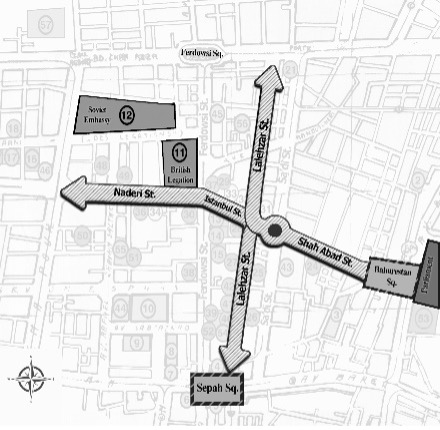
map 4.
Allied Troops’ Presence in the Lalehzar District
In addition to the ongoing conditions of occupation, this global macro-event brought about a significant transformation in the micropolitics of streets and neighborhoods, including Tulip Grove. The arrival of Allied troops and Polish refugees not only introduced new demographic complexities, but also altered the dynamics among residents. Affiliated with the occupying powers, Allied troops exhibited a sense of superiority that encroached on the urban fabric and contested its spaces, symbols, meanings, support systems, and power structures. The disruptive impact of the egregious misconduct, felonies, and crimes of Allied troops emerged as a significant challenge for the population.
Not only were civilians subjected to violations of their physical space, but even City Police and Iranian military personnel found themselves victimized. These encounters with Allied occupiers at the individual, personal, and local levels contributed to a collective experience of trauma, insecurity, and a pervasive sense of crisis. This situation, in turn, exacerbated tensions between the respective governments.[46]
A highly visible community in Tulip Grove, Allied military personnel emanated the image of a drunken foreign menace as they crowded in restaurants, cafés, and cinemas (fig. 9), roaming the streets, mingling in live music bars with “modernized” (mutajaddid) Tehran residents, and with Polish women who worked in these establishments.[47] The reason for such a pronounced foreign military presence in this area lay in the leisurely ambiance of the urban site, so significant that in April 1942 the British Air attaché made a formal request to the Iranian Ministry of Foreign Affairs for a daily bus service between Lalehzar Street and the Shahbaz Aircraft Factory at Dushan Tappah, near Tehran.[48]
The newly arrived American soldiers in Tehran were primarily lodged in various hotels, including those in the Tulip Grove area. Upon their arrival, they were cautioned against rowdy behavior due to alcohol consumption, yet such indiscretions nonetheless occurred. A June 16, 1942 report from Tehran details the behavior of Pan-American personnel in the city, noting incidents such as army vehicles left unattended on streets after curfew hours, causing disturbances at the entrance to Lalehzar Hotel, and sightings of a Firdawsi Hotel resident intoxicated at both Palace (fig. 10) and Firdawsi Hotels.[49]
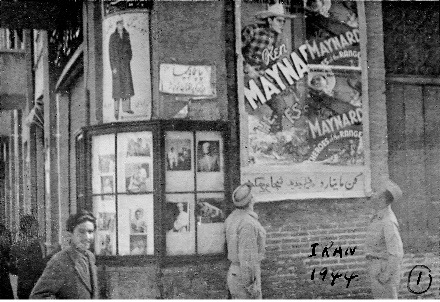
Figure 9. Two American troop members in front of a cinema in the Tulip Grove District. Source: Edward Lee Greenbird, Somewhere in Persia: Memoirs of a War Correspondent (Surreal Primitive, 2020). Courtesy Edward Lee Greenbird
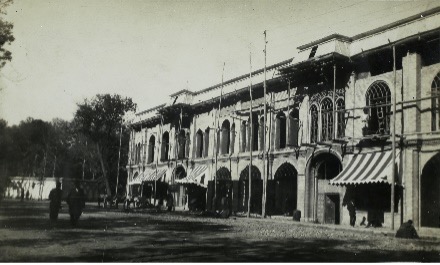
Figure 10. Palace Hotel, ca. 1920s. Source: Estādux
Among other crimes, Allied soldiers were frequently involved in spontaneous, disorganized robberies that seemed aimed at asserting dominance over the local population. In one instance, two armed British soldiers stole five books and assaulted a storeowner at the Conte Intersection on Lalehzar Street. Similarly, two intoxicated Soviet officers robbed a couple of shops on Shah Avenue, stealing notebooks and luggage.[50]
Allied troops also actively sought out women throughout the city, engaging in sexual harassment in public, frequenting brothels, and clashing with local men over women. One notable incident involved three British officers assaulting an Iranian carriage driver who refused their demand to procure women.[51] In another incident, a Soviet officer harassed two families on Firdawsi Street, leading to a violent altercation on December 30, 1942.[52] While injured locals would be taken to health clinics, the foreign assailants often fled the scene without providing identification. Because locals found it difficult to distinguish between British and American troops, diplomatic representatives sometimes blamed one another, denying their respective armies’ involvement. The Soviets, in an apparent attempt at deterrence, even executed one of their officers responsible for disruptions at the Firdawsi Hotel.[53]
In June 1942, in response to frequent misconduct by British and American soldiers, the Station Standing of the British Army in Tehran issued orders to reassert control. These included formal guidelines on saluting, attire, and interactions with Iranians, and declared “drunkenness” a court-martial offense in the Middle East.[54] Certain sites were designated off-limits, including Tehran’s red-light district and the Polish refugee camps, except for duty or on formal invitation. Meanwhile, Tulip Grove venues like Astoria, Continental, Miami, Firdawsi, and Palace, were approved destinations, likely through arrangements with City Police regarding curfew times and alcohol service.[55] The order also addressed venereal diseases, mandating that infections be reported and threatening loss of proficiency pay for those physically compromised by disease or alcohol. If a soldier refused to leave a venue after 11 p.m., the proprietor was required to notify the military police.
Anxieties over sexual relations between foreign troops and Iranians were further fueled by the popularity of partner dancing in Tulip Grove, aligned with the “Dance Craze” in Europe and the United Sates. A confidential June 1943 letter from the U.S. legation to the State Department reported that public dancing between troops and Iranian women prompted a major cleric to pressure the City Police to ban such Western-style social dancing in restaurants and hotels. When restaurant owners protested over potential financial losses, the cleric reportedly insisted, “We don’t want our Iranian women to dance with foreigners.”[56] A ban appears to have been implemented temporarily.[57] Given the relatively recent unveiling of 1936, these displays of Iranian women dancing with foreign men were framed in Islamic-leaning periodicals as threats to Iranian “honor.”[58]Among them were periodicals with Islamic inclinations that used the situation to consolidate themselves and their readers against foreign sources of obscenity.[59] In her memoir, Nesta Ramazani recounts how local women who socialized with foreign men were publicly shamed with insults such as “whore” and “traitor.”[60]
These incidents highlighted the challenges of managing troops’ sexual conduct in a country with distinct cultural and religious norms.[61] In an effort to contain such behavior, the British Army established a Welfare Committee for the Tehran Sub-Area on December 10, 1942. The committee aimed to “preserve the morale of the army by catering to the leisure time of the troops,” under the assumption that a structured welfare system would curb the troops’ inclination to frequent local cafés and restaurants. To further this goal, the British also assisted in entertaining American troops as a measure to contain their disruptive actions when interacting with Iranian society. The conduct of Allied forces—especially the British, known for their heavy drinking—became an unintended and damaging facet of their nations, undermining propaganda efforts and jeopardizing postwar interests. These actions were counterproductive to their significant investments in propaganda activities and their rivalries over the persuasion of Iranian public opinion.
Allied Propaganda and Cultural Geopolitics
With the Anglo-Soviet invasion of Iran in August 1941, the cultural landscape of the Lalehzar District underwent a drastic transformation. On the one hand, Axis influence had to be eradicated; on the other hand, Allied governments each pursued intensive propaganda campaigns to sway Iranian public opinion to their advantage. This strategic zone became the epicenter for these efforts.
The German Brown House was converted into the British Victory House, which housed the Public Relations Bureau, the propaganda arm of the British Ministry of Information within the War Office. From here, overt propaganda operations were launched. Aware of their unfavorable image due to two centuries of imperialist intervention and recent troop misconduct, the British produced newsreels and radio segments, notably featuring Miss Lambton at Radio Tehran.[62] The BBC Persian broadcasts from London complemented this “utopian” portrayal of a progressive Iran populated by responsible, modern citizens.[63]
In parallel, the British Council, active in Iran since 1935, adopted a more tacit strategy.[64] Attempting to replace the old image of British imperialism with a more favorable democratic one, the British Council claimed negative perceptions were products of Reza Shah and German propaganda. Through exclusive cultural programming targeting professionals, intellectuals, and artists, it sought to promote “Western standards of behavior” and gender norms for postwar influence.[65]
Recognizing Iranian esteem for the arts, the British Council drew inspiration from France’s continued cultural influence despite their military defeat.[66] They invested in British cultural promotion through concerts, English language classes, and the Anglo-Iranian Drama Society, aiming to ultimately replace French as Iran’s intellectual and educational lingua franca.[67] Formed in September 1943 and led by army officer and former actor Hilary Wontner, with amateur members from the British Council staff and club, this drama society insinuated itself into the already Soviet-dominated theatrical sphere of Tulip Grove by staging British dramatic literature, translating plays into Persian, and holding soirées.[68]
However, these British efforts proved ineffective. This is illustrated in a letter addressed to the British Area Commander of the Tehran Sub-Area by an Iranian woman, Ms. Mahmoodi. She recounts an incident on Shahreza Avenue where she had to flee from two Indian soldiers armed with cold weapons who pursued her at night. She questions the substantial sums the British were spending on their propaganda activities to justify their war efforts as a pursuit of democracy and freedom, contrasting this with her praise for the discipline exhibited by Russian soldiers in urban areas.[69] Similarly, a report on Soviet propaganda by the American minister criticized British troops for their public drunkenness, which tarnished their nation’s image. Soviet troops, by contrast, were lauded as the most effective publicity agents for their country. The report described them as disciplined, serious, and amiable, noting their tendency of maintaining respectful distance from Iranians while still frequenting restaurants and shops.[70]
Undoubtedly, the Soviets’ broader and more inclusive propaganda strategy placed them at the forefront of influence. Socialism was also rapidly gaining appeal among both intellectuals and the underprivileged. A U.S. State Department report from January 1943 emphasized that the Soviets, through effective propaganda campaigns in the Northern Soviet zone, could quickly seize control of Azerbaijan if necessary.[71]
With the formation in 1941 of Iran’s Tudeh Party, the largest leftist organization at the time, the Soviets found a stand-in for social representation. Through Tudeh Party’s active recruitment of major Iranian literary and artistic figures, Soviet sympathy permeated Iran’s cultural sphere. Their presence was most prominent in the Tulip Grove neighborhood, where their headquarters, newspaper offices, and Youth Club stood across from the Soviet legation. While the Youth Club targeted a broader, blue-collar audience with theatrical and musical events, the Tudeh Party dominated the theatrical scene for “elite” audiences through the pioneering figure and core party member Abdul Hussayn Nushin.[72]A passionate advocate and speaker, Nushin directed two successful companies, the Firdawsi and Sa’di Theaters.
The Tudeh Party’s “performative politics,” however, extended beyond indoor venues. To reach a wider public, they moved into the streets of Tulip Grove, organizing well-choreographed demonstrations that could draw up to 12,000 participants.[73] According to my interviewee, veteran Tudeh Party member Muhammad Ali Amu’i, every detail, including demonstration routes, was well planned for maximum effect.[74] Events ranged from poetry readings by a ten-year-old to chanting slogans calling for the downfall of opposing ideologies, roadside debates persuading street sweepers and police to join the party, and even violent clashes between the police and Tudeh members that sometimes escalated into open gunfire.[75] The Iran-Soviet Friendship Association, with apparent ties to the VOKS, a Soviet agency promoting cultural and artistic relations with other countries, contributed to the conversion of Tulip Grove by showing free screenings of Russian films at Cinema Mayak, inviting the Soviet Circus in 1943, and broadcasting radio programs on Russian music and art on Radio Tehran.[76]
Although the United States was not an original signatory to the Treaty of Alliance, it nonetheless devised strategies to shape Iranian public opinion and rival Britain and the Soviet Union in securing postwar influence. This is evident from the first publicity memorandum of the American legation in Tehran, drafted on February 2, 1942, just two months after the U.S. entered the war. The memorandum proposed an “independent propaganda” system, reflecting the Americans’ proactive approach: “While many are grateful for the establishment of educational and medical facilities, the more important consideration is that we are trusted, and people are satisfied that we have no ambitions for political or economic control in the country; the same can’t be said of the position of the British and the Russians.”[77] This quotation reflects the high regard in which the United States was held.
A key aspect of the American propaganda strategy was to maintain a distance from the British, whose imperial image and troop misconduct had drawn widespread criticism.[78] The memorandum also acknowledged Iranians’ susceptibility to flattery, particularly references to “Persia’s contribution to the fields of art, poetry, and architecture.” This observation might have been influenced by art historian Arthur Pope (1881–1969) and his visits to Iran in preparation for his Survey of Persian Art. One of the United States’ most significant cultural projects in Tulip Grove was its infiltrating the Office of Theatre and Cinema at the Iranian Ministry of Interior through Nilla Cram Cook (1908–82), an American cultural attaché who led the Censorship Office until the end of the war. The U.S. also supplied cinemas with fiction films, reels, and equipment.[79] These efforts were well-projected in Tulip Grove: by March 1943, American movies dominated the cinemas, comprising about 80 percent of screenings, surpassing their Soviet, French, and German competitors, whose distribution had been discontinued since August 1941.[80]
Yet the unintended consequence of the United States’ public diplomacy initiatives was the growing backlash to the conspicuous presence of American troops. As the number of American servicemen in Tehran rose as part of the Persian Gulf Command led by General Donald Hilary Connolly (1886–1969), so did public complaints. By late 1943, the American force numbered to 28,000, surpassing the British, Soviet, and Polish contingents.[81]
This led to heightened criticism of American misconduct, eclipsing even the concerns about British and Soviet troops.[82] The absence of a formal U.S. commitment to the Treaty of Alliance further inflamed tensions, as the large American military presence was deemed illegal. Even though nominally under the British flag, the U.S. should have signed a separate agreement related to Article 4 of the treaty. This prompted the Prime Minister, the Majlis, and the press to criticize the situation and call on the American legation to formalize an agreement.
Between March and December of 1943, U.S. Minister Dreyfus consistently alerted the State Department to the decline in American prestige and the shift in Iranian attitudes from friendly to hostile. He criticized Connolly for failing to control the troops, for his utilitarian approach toward the natives, and for disregarding public sentiment. Dreyfus repeatedly urged the State Department to pressure the War Department to hold the Persian Gulf Command accountable,[83] warning that Connolly’s negligence was undermining postwar American plans, as declared in the new American Policy in Iran.[84]
In July 1943, Dreyfus warned the State Department that the press campaign in Tehran had “reached a state of vileness unequaled anywhere else in the world.”[85] He enclosed recent hostile newspaper clippings, including an editorial piece published in Iran-i Ma on July 13, 1943. The author details American soldiers’ behavior on Lalehzar Street, such as standing in a line and urinating in an alley, gambling with thugs, throwing fruit pits onto sidewalks, and French kissing a Polish girl in a café, ignoring local mores of decency. The piece ends:
Everybody has seen intoxicated American soldiers shouting and stopping the traffic as a result of one glass of ‘Arak’ [Iranian inexpensive vodka]. These soldiers swear to heaven and earth in their own, as well as in the Persian language. They annoy the passers-by, and the police do not dare to do anything with these stout and strong guests. The police keep silent! Do not ask me what is happening in this city’s half-dark northern streets. Things are taking place which cannot be said here.[86]
In a follow-up correspondence on the matter, Dreyfus shares another Iran-i Ma piece, published in August of the same year, entitled “What Is Happening on Istanbul Street.” It recounts how several American soldiers assaulted an Iranian man defending a woman before attacking a policeman. Criticizing Iran’s failure to defend the dignity its people, the article ends with the statement, “When are we going to show that we are still alive, and we can no longer stand it?”[87]
A similar incident occurred in Café Nowbakht in the Lalehzar area, where an Armenian Iranian man was stabbed for defending an Iranian woman assaulted by three American soldiers. In diplomatic exchanges, the Iranian side referred to the woman as a “lady (banu),” while the Americans called her “a prostitute,” though they pledged to prevent other such incidents.[88]
In another Iqdam article, two incidents from May and July 1943 are highlighted, both occurring at the Istanbul-Lalehzar intersection (map 5), involving intoxicated American soldiers who assaulted Iranian civilians.[89] The author raises a poignant concern:
The country that has supplied us with advisors possesses a formidable army in our land. They have occupied our country without a treaty. The members of their armed forces throw bottles of liquor on the heads of our people in broad daylight. Their advisors dominate us by force of such regulations; wait until we see the ignominy of these regulations after five or six days of their operation. Then, we will say that Iran went from one form of oppression to a thousand different kinds of coercion. We write and make statements and do not fear anyone.[90]
The initial response to Dreyfus’s warnings and demands was positive, as the troops were relocated to camps outside Tehran, including Camp Amirabad (fig. 11). However, this measure was insufficient. Dreyfus described the troops as untrained, undisciplined, and hastily deployed, and he strongly rebuked Connolly for
giving free rein to these unhappy soldiers in disciplinary matters since he has no interest in our position in this country and continues his policy of Iran to be damned: due to the reputation for drunkenness, rowdyism, and for a complete lack of respect for the sensibilities and customs of the local population. The cases of misconduct towards women are particularly offensive, and it is reported that the streets of Tehran are, particularly at the moment, places to be avoided by respected women.[91]
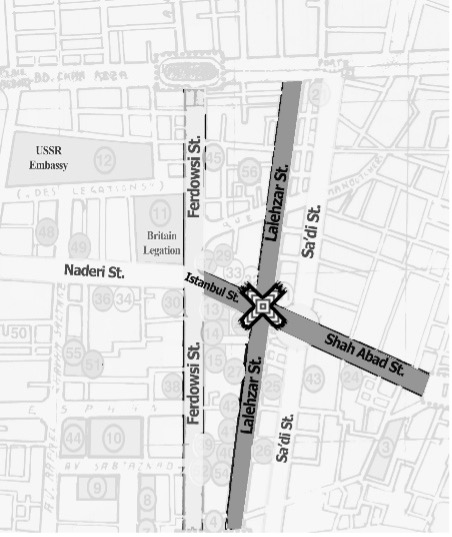
.map 5
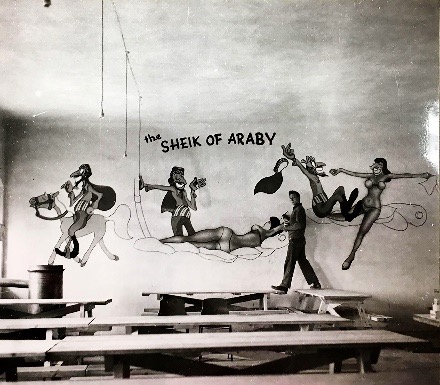
Figure 11. Recreational area at Camp Amirabad. Source: The Library of Congress
An examination of Iranian documents further reveals a spectrum of sexual misconduct by the troops, escalating beyond instances of pinching and molestation to include acts of abduction and even rape. The case of ‘Uzra, a ten-year-old girl who lost her virginity as a result of being raped by an American soldier in the entryway of the office of newspaper Sida-yi in Tulip Grove, exemplifies this dire situation.[92] Dozens of cases, complaints, and letters to the Majlis, newspapers, and embassies indicate that the issue gradually became a national concern. While ordinary citizens began questioning the ability of Iranian authorities to protect citizens and safeguard national security, one of the most pressing concerns was that if the honor of Iranian women could not be protected in the capital, what would happen in the rest of the country?
This concern is exemplified in a letter from a woman named “Iran” to the parliament describing the forced abduction of ordinary najib Iranian women on Shahreza Street into British and American military trucks:
“What kind of country and homeland is this when a bunch of dishonorable aliens have besieged its women? We, the people, are truly desperate. Because of these rascals, we can’t even pass through Shahreza or Simetri. Why is no one listening to the people to do something? What should us poor women do in this situation?”[93]
The concern was followed up on by the Parliament and the Ministry of Foreign Affairs, which contacted the respective legations and received (empty) promises of cooperation upon receipt of specific information.[94] The abduction of women in the area was also portrayed in a fictional piece in the weekly Taraqqi, entitled “Hunting on Lalehzar Street: How Chic Women Are Being Stolen,” which depicts the rape of a newlywed woman by American soldiers after she naively accepts a ride in a Buick 41.[95] The story ends with a more general warning: “Every day dozens of Iranian women lose their chastity in that (metaphorical) bed.”
Due to ongoing criticisms and the decline of American prestige, policymakers in Washington began to reassess their approach to Iran. While superficially framed as a test case for the United Nations and the ability of its members, including Britain and the Soviet Union, to cooperate, the new policy also aimed to proactively secure U.S. postwar economic objectives and strategic interests.[96] It emphasized that “American national interests require closer attention with regards to Iran’s strategic geopolitical location, and the world, particularly as regards petroleum concessions, civil air bases, and increased commercial exchange.” It was also stressed that further American involvement in Iran would naturally present its citizens with a more realistic image of the United States, thereby mitigating concerns about public opinion.[97]
Meanwhile, as Dreyfus’s criticism of Connolly intensified, the War Department accused him of having a problematic personality and acting against American interests. Based on these accusations, they forcefully demanded that the State Department dismiss Dreyfus.[98] Anticipating shifts in American policy in 1944 and under pressure from the War Department, Dreyfus was dismissed shortly before the Tehran conference.
The Big Three
The meeting of the Big Three (Churchill, Stalin, and Roosevelt) also happened in Tulip Grove, between 28 November and 1 December 1943. This globally significant event came to the knowledge of Iranian authorities a few days before the meeting, perhaps due to security measures. Nevertheless, the original venue was abruptly changed from the British legation to the Soviet one when the Allies received rumors of a German plot orchestrated by German spy Franz Mayr for the assassination of Churchill, known as Operation Long Jump.[99]
Among the notable occurrences during the conference were the ceremonial presentation of the Sword of Stalingrad to Stalin by Churchill and the celebration of Churchill’s birthday.[100] Held discreetly away from public and media scrutiny, the conference unfolded as a lavish affair, starkly contrasting with the dire circumstances faced by many ordinary Iranians, who were grappling with starvation. Unlike Churchill and Roosevelt, who had limited contact with the Shah, Stalin was warmly received for a visit, raising anxieties among his Allied counterparts.
The departure of the Big Three was marked by a symbolic gesture, with three streets in the Tulip Grove area renamed Churchill, Stalin, and Roosevelt Streets in honor of the Allied leaders.[101] Following these events, diplomatic representation of Britain and the United States was elevated from legations to embassies.
Despite Dreyfus’s departure and the subsequent policy shift in 1944, the United States’s practice of disregarding Iranian demands did not endure. The mounting incidents involving American troops, the failures of American missions in Iran, and the negative propaganda and alleged sabotage by the Soviets and British against the Americans led to increased pressure from Iranian authorities. This pressure was particularly directed at the lack of legality of American troops in Iran without reaching a formal agreement, prompting the Majlis to question the Prime Minister on the matter.[102] The situation became increasingly tense for the State Department following a communication from the British Charge reporting his conversation with the Shah. This information is detailed in a telegram from U.S. chargé d’affaires Richard Ford to the State Department dated August 12, 1944. In this exchange, the Shah strongly criticized the United States and all things American, expressing the desire for both advisors and the Persian Gulf Command to leave Iran. He specifically mentioned the U.S. government’s “refusal” to sign an agreement formalizing its military presence.[103]
Another controversy followed in November 1944, when an American soldier assaulted an elderly man, Hossein Farzaneh, in his own home. This incident reignited public outrage around the issue of an “American agreement.” An editorial in the daily Ittila‘at, entitled “What Intoxicated Soldiers Do,” concluded with a clear statement: “If these actions are overlooked and not properly handled, no one will be secure in their own home.”[104] The dispute then reached the Russian official newspaper Izvestia, which expressed the Soviet stance: “The deployment of American troops in Iran without the authorization of a treaty constituted a violation of Iranian sovereignty.” This was not the first time the Soviets criticized the American presence in Iran.[105]
Combined pressures from the Majlis, the Shah, and the Soviets in response to the assault of Hossein Farzaneh renewed discussions within the American ranks. This prompted an internal State Department investigation to review the initial steps of drafting a potential agreement and identify the factors that ultimately led to the suspension of these efforts.[106] The inquiry aimed to assess whether a sincere attempt had been made to reach an agreement on troop jurisdiction.
After analyzing more than 3,000 pages of correspondence between the Iranian Ministry of Foreign Affairs and U.S. State Department, my findings reveal broader challenges faced by Iranians in urban areas like Tulip Grove. To begin, there is a noticeable disparity in the perception of jurisdiction between the Iranian and American sides regarding American troops in Iran. From February 1942 to January 1943, the Iranian authorities consistently demanded the trial of American troops in Iranian courts, according to Iranian law, and due to their ongoing criminal conduct. However, the American stance, communicated in January 1943, demanded independent jurisdiction for the criminal conduct of troops in American courts—an arrangement often interpreted as capitulation. In response, in February 1943, the Iranian Ministry of Justice reiterated the need to resolve the legal status of American troops.[107]
The State Department subsequently drafted a revised agreement, which, once again, faced rejection from an Iranian counsel. They considered it too lengthy, complicated, and inadequate in safeguarding Iranian jurisdiction rights and broader interests. Therefore, they proposed revisions to address these concerns.[108] At the same time, the Soviet legation contested the American draft, arguing that it undermined Soviet rights in their predominantly controlled northern zone.[109] After several months of negotiation, the proposal for an independent American treaty was ultimately rejected by the War Department, largely due to General Connolly’s opposition. Their rationale, based on the lack of inquiries from other countries regarding such an agreement, emphasized the need to avoid potential legal and financial liabilities for the United States, especially after the war. The final decision on the American side was to convey to Iranian, Soviet, and British authorities that the Persian Gulf Command was operating in Iran under the auspices of the British army.[110] In practice, Connolly’s actions did not fully align with the directives of the British Army Command, leading to tensions between their respective governments.[111] Later, under persistent pressure from Iran, the American side was compelled to adopt the British version of the agreement, particularly as stipulated in Article 4, to formulate a new document.[112] Amid mounting pressure, a draft was eventually presented to Connolly for his input. Surprisingly, he denied any prior knowledge of the Iranian government’s requests for such a treaty or of any British recommendations on the subject. Introducing a clause for the immunity of armed forces, he further emphasized that, as the commander of Persian Gulf Command and due to military necessity, he had already taken the “propriety of exercising the rights which might be conferred under a treaty of judicial immunity.”[113] Despite recognizing the sensitivity of the Iranian government regarding any actions that might be perceived as a violation of Iran’s sovereign rights, U.S. chargé Ford and his colleagues harbored doubts about the necessity of a formal agreement. This skepticism was particularly pronounced given the strengthened position of the United States following Iran’s recent adherence to the Declaration of the United Nations.[114] Therefore, by December 1944 no agreement was signed regarding the status of American troops.[115]
While the neglect of Iranians’ lawful demands regarding reaching an agreement appeared to stem from a conflict of opinion between the State Department and the War Department, General Patrick G. Hurley’s top-secret report to President Roosevelt reveals deeper divisions within the State Department itself. This division was between those upholding the ideology of the Atlantic Charter and the United Nations, and those with imperialist, monopolist, and exploitative agendas. It was the latter group who intentionally acted against the principles of the Atlantic Charter.[116]
This perspective is further elucidated in the memorandum by Paul H. Alling of the Office of Near East Affairs, discussing the revised American policy of August 1944. To advance significant American interests in Iran, he suggests tolerating criticisms and handling the situation with patience and tact, particularly with these “difficult, proud, stubborn, and strangely conceited people.” In essence, he recommends disregarding Iranian public opinion and prioritizing this shift toward a new American status.[117]
In the remaining months of the war, it was the U.S. embassy in Tehran that complained about Iranian expressions of anti-American hostility and the riotous behavior directed at U.S. personnel in Tehran. Acts such as throwing camel dung, mud, and watermelon rind at Army officials’ cars around Sepah Square, or group confrontations with the American soldiers or drivers immediately after car accidents, were noted.[118] In response to the American Embassy’s demand to further address Iranian civilians’ growing anti-American misconduct, Prime Minister Eqbal wrote, “Instead of lamenting for yourselves, you should be more considerate of the victims harmed by your troops’ careless actions and ensure that those incidents do not happen again.”[119]
Victory Celebrations
A celebration for pedestrians in Tulip Grove and the entire country would occur with the end of the war in Europe. Now, through rituals, symbols, and staged references that produced a “new form of geopolitical knowledge,” the occupied people of Iran were expected to celebrate the victory of the occupying superpowers as their own.[120] As a “victorious” Allied power, the Iranian state organized three days of nationwide celebrations that began with the Shah’s speech on the radio on May 15, followed by 101 cannon shots and street performances of martial music presented by the Ministry of War in major city centers. These areas were adorned with Iranian and Allied flags, hastily produced in local factories.[121]
Tulip Grove was the epicenter of these celebrations, with Sepah Square serving as the main stage for public spectatorship. The program featured a special radio show, a film produced by Iranian Radio, live percussive music (naqarah), and fireworks. Official celebrations involving diplomatic and military personalities and Iranian political elites were organized in soirées held at the Ministry of Foreign Affairs and the Officer’s Club.[122] The Soviets widely shared the joy of the war ending, including in Tulip Grove and rural regions where VOKS held offices were active. Another celebration came with the departure of Allied forces.[123]
Cold War in Tulip Grove
Following the conclusion of the war, the conflicts among the Allies, particularly between the Soviet Union and the United States, became increasingly evident. In response, the new ambassador, George Allan, sought funding from the U.S. State Department to pursue publicity programs in Iran. His letter dated September 30, 1946 states, “Iran is one of the outstanding countries where our cultural and press activities can really be effective. Eastern European countries need our attention, but they are already behind the Iron Curtain. . . . The curtain may fall here, but we may prevent a complete blackout.”[124] This aligned with the fact that despite initial assurances, the Soviet Union postponed the withdrawal of its troops and redirected them to bolster the newly established People’s Democratic Republic of Azerbaijan—a development already foreseen by an American mission in 1943.[125] This decision sparked a significant diplomatic controversy, which the United States resolved by supporting the Iranian cause at the United Nations. This diplomatic maneuver secured a significant victory for the United States in the Cold War, simultaneously aiding in the restoration of the tarnished American image in Iranian public opinion.
The improved perception of the U.S. among Iranians prompted American policymakers to strategically “capitalize on” and “take advantage of” this newfound position as a tactic to gain broader support for U.S. foreign policy within Iranian society. The proposed information and cultural initiatives involved advocating for democratic processes and highlighting the potential for economic development in Iran.[126] This branding of democracy bore the marks of British propaganda previously deployed during the war. It did not take long, however, for the United States to join forces with Britain in orchestrating the 1953 coup d’état against the popular Prime Minister, Mohammad Mosaddegh. Subsequently, the instrumental and imperialist nature of American policy overshadowed its idealistic self-image.
Between 1946 and 1953, the shifting dynamics between the United States and Soviet Union was materialistically reproduced in Tulip Grove as it became a Cold War battleground. On one side, there were constant attacks on Tudeh-affiliated offices and newspapers, while on the other side, the party struggled with continued demonstrations (fig. 12). These events provided new spaces for the public performance of anti-American sentiment, including the burning of Uncle Sam’s effigies and signs reading, “Yankee go home!” (fig. 13). The culmination of this Cold War confrontation in Tulip Grove unfolded during the coup, marked by destructive actions taken against politically symbolic sites, such as those associated with the Tudeh party and Mosaddegh supporters, the Prime Minister’s residence, as well as the British Petroleum office (fig. 14).
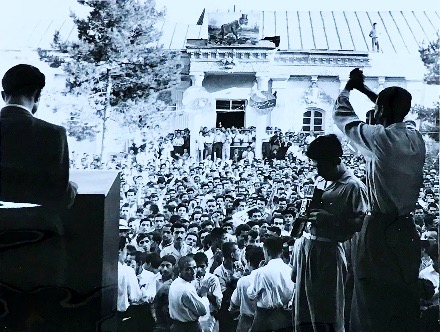
Figure 12. Tudeh demonstration at Khanah’i Sulh (House of Peace) on Firdawsi Street, ca. 1950–51. Source: Library of Congress
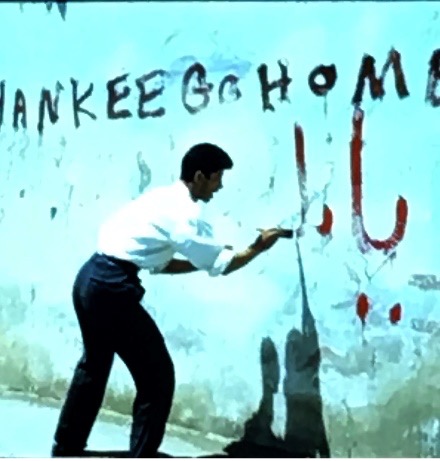
Figure 13. Leftist Anti-American Expression, ca. 1950–53. Source: Library of Congress
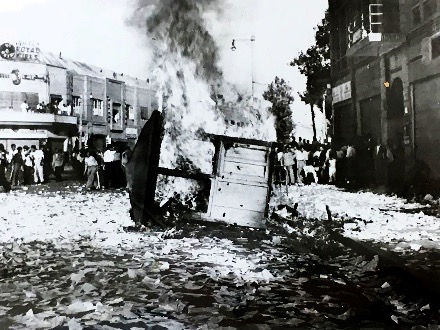
Figure 14. Burning a leftist newsstand during the coup. Source: Library of Congress
The striking images of urban destruction, the highly publicized trial of Mosaddegh captured by foreign journalists’ cameras, as well as the mass imprisonment of political activists and the ensuing repression left deep scars on Iran’s collective memory. They also distorted dominant historical narratives that often elevate the coup as the primary cause of Iranian grievances against the United States. Such fixation on the 1953 coup has resulted in a gap in deeper studies of the repercussions of the World War II occupation of Iran on the livelihoods of ordinary citizens. It also fails to recognize the increasing resentment toward the occupiers, including the United States. Last, it has rendered the agency of Iranian nonstate actors and governmental authorities, who despite common assumptions remained steadfast in their insistence on Iran’s sovereignty and the integrity and rights of its citizens, invisible. Examining urban landscapes with a critical perspective, where international, national, and everyday tensions intersect, helps to uncover a more nuanced version of history. Perhaps a vigilant observer at the corner of Istanbul and Lalehzar Streets would have seen the hostage crisis coming.
I extend my sincere appreciation to Dr. Ali Tatari for his invaluable support in gathering archival documents in Iran, to Dr. Mohamad-Kazem Sajjadpour for his valuable encouragement, and to Mohammad Gholamnejad for his assistance in designing original maps for this article.
[1] Feminist and critical urban geopolitics examines how power, conflict, and security are experienced and contested in everyday urban life, especially by marginalized groups. It challenges state-centric and abstract geopolitical frameworks by foregrounding embodied, emotional, and place-based experiences, emphasizing how global processes shape and are shaped by the micropolitics of city streets, homes, and bodies. This approach highlights the intersections of gender, race, class, and affect in urban spaces, offering alternative ways to understand and resist geopolitical power
[2]Vanessa A. Massaro and Jill Williams, “Feminist Geopolitics.” Geography Compass 7, no. 8 (2014): 567–77, 567.
[3]The concept borrowed from Amy Mills, “The Cultural Geopolitics of Ethnic Nationalism: Turkish Urbanism in Occupied Istanbul (1918–1923),” Annals of the American Association of Geographers 107, no. 5 (2017): 1179–93, 1181.
[4]The name “Lalehzar” refers to the street’s origins as a Tulip Garden.
[5]Ida Meftahi, Gender and Dance in Modern Iran: Biopolitics on Stage (Routledge Iranian Studies Series, 2016), 20–50.
[6]Department of Documents and History of Diplomacy of the Ministry of Foreign Affairs of Iran (Estādux): SH1313 K27 P1, S.41–44, Az Idarah’i Sivvum Siyassi, Vizarat-i Umur-i Kharaijah bah Sifarat-Shahanshahi-yi Landan [Third Political Department, Ministry of Foreign Affairs to Imperial Embassy of London (British Legation Legation)], 13 Isfand 1313/ 4 March 1935; Estādux: SH1313 K27 P29, p. 1, Az Idarah’i Hissabdari, Shahrdari-yi Tehran bah Vizarat-i Umur-i Kharijah [From Finance Department, Tehran Municipality to Ministry of Foreign Affairs], 14 Bahman 1313/ 3 February 1935.
[7]C. Van. H. Egert, Charge D’affaires A. I., American Legation in Tehran, to Secretary of State, Washington, February 4, 1938, no. 1226, 840.2, Foreign Service Posts of the Department of State, Tehran Embassy, Record Group (RG) 84, National Archives at College Park, College Park, MD (hereafter NACP).
[8]Ida Meftahi, “Enlacer l’ajnabi (l’étranger): Une histoire politique de la danse de couple à Téhéran, 1920–1950 [Intimate Embraces with Ajnabi (Strangers): A Political History of Partner Dancing in Tehran, 1920–1950], Clio, Femmes, Genre, Histoire 46, no. 2 (2018): 111–33.
[9]The National Archives of the UK (hereafter TNA): BW49/1/PER/2/1, From Mr. Gass of Anglo-Iranian Oil Company to Mr. Baggalay, British Council, London, “Germans in Iran,” 2 February 1940.
[10]“Survey of Motion Picture Conditions—Iran,” James S. Moose, Jr., Tehran, January 26, 1940; box 36, vol. 840.6, 1940:800.1-851.6, p. 5, RG 84, NACP.
[11]Information provided by the German scholar Roman Siebertz.
[12]TNA: E 842/2/34, From Sir. Bullard, Tehran to Mr. Baggallay, “Miss Lambton’s Work in Iran,” pp. 21, 90; TNA: E1036/36/34, From Mr. Radcliffe to Mr. Lockhart, “Ministry of information plan for propaganda in Persia,” 11 February 1842, p. 29. For a comprehensive exploration of business and economic interactions, including the involvement of German business firms and experts hired for projects such as hospitals and railways, see Jennifer Jenkins, “Iran in the Nazi New Order, 1933–1941,” Iranian Studies 49, no. 5 (2016): 726–51, pp. 37–38.
[13]TNA: E 294, From Military Attaché in Tehran to the War Office, July 1941.; TNA: E1965/48/34, “From Sir R. Bullard in Tehran Telegram no. 122,” 10 May 1940; TNA: E2032/48/34, “From Sir R. Bullard in Tehran Telegram no. 136,” 1 May 1940.
[14]TNA: E 1695/6/54, From Sir Bullard, Tehran, “German-Iranian and Soviet-Iranian Relations,” 30 March 1940.
[15]TNA: E 1545/621/34, From Sir Bullard, Tehran, “Iranian Foreign Relations,” 27 March 1940.
[16] Despatch no. 17, Dreyfus to Secretary of State, Tehran, March 20, 1941; Box 43, Vol. 820.2, 1941:802.1-848, p. 1, RG 84, NACP.
[17]Youssef H. Aboul-Enein and Basil H. Aboul-Enein, The Secret War for the Middle East: The Influence of Axis and Allied Intelligence Operations during World War II (Annapolis, MD: Naval Institute Press, 2013), 107; TNA: E 842/2/34, From Sir. Bullard, Tehran to Mr. Baggallay, “Miss Lambton’s work in Iran”, p. 90.
[18]Treaty of Alliance, U.K., -U.S.S.R., -Iran, January 29, 1942, Class 701, pp. 54–59, General Records of the Department of State, RG 59, NACP.
[19]For a comprehensive study of the Persian Gulf Command, see Ashley Jackson, Persian Gulf Command: A History of the Second World War in Iran and Iraq (New Haven, CT: Yale University Press, 2018).
[20]“Ministry of Finance and Connected Organizations (American),” Shahrivar 1323/ September 1944.
[21]The Atlantic Charter, introduced during World War II in August 1941 by the United States and Great Britain, promoted postwar principles like self-determination, trade liberalization, and disarmament, gaining support from twenty-six Allied nations by January 1942 and laying the groundwork for the United Nations’ formation in 1945.
[22]Louis G. Dreyfus, Jr., United States Minister to Iran, to United States Secretary of State, Tehran, March 9, 1943, box 2236, 711.90D/9-711.93/469, vol. 711.91/92, pp. 1–6, Decimal File, 1940–44 (Decimal 1940–44), General Records of the Department of State, RG 59, NACP); “American Policy in Iran,” Advisor of Political Relations, U.S. Department of State, January 23, 1943, enclosed in Dispatch No. 202 from Sumner Welles, Under Secretary of State, to Dreyfus, Washington, DC, March 13, 1943, box 2236, 711.90D/9–711.93/469, vol. 711.91/91, pp. 2–8, Decimal 1940–44, RG 59, NACP.
[23]Estādux: SH1320 K74 P83, p.80, Az Ra’is-i Majlis-i Shawra-yi Milli bah Vizarat-i Umur-i Kharaijah [From Speaker of National Parliament to Ministry of Foreign Affairs], 2 Mihr 1320/ 23 September 1941.
[24]Estādux: SH1320 K74 P83.3, p. 22, “Guzarish,” Vizarat-i Umur-i Kharijah [“Report”, Ministry of Foreign Affairs], 28 Day 1320/ 22 December 1941.
[25]Among them were Shah’s brother-in-law and Ayatullah Kashani, the leading figure in the 1953 Coup; Estādux, SH1320 K74 P83.3, p. 22,Guzarish, Vizarat-i Umur-i Kharijah (Report, Ministry of Foreign Affairs), 28 Day 1320/ 22 December 1941. For more information, see Shaul Bakhash, “The ‘Officers Plot’: The German Fifth Column during the Anglo-Soviet Occupation of Iran in the Second World War,” British Journal of Middle Eastern Studies 50, no. 2 (2023): 262–80.
[26]TNA: E 1053/621/34, from Sir Bullard, 8 March 1940, “Relations Between Polish Representative and Iranian Government.”; the document describes the controversy over the Polish representative’s invitation to Shah’s birthday.
[27]Estādux: SH1321 K69 P3, p. 1, Az Vizarat-i Dara’i bah Vizarat-i Umur-i Kharijah [From Ministry of Finance to Ministry of Foreign Affairs], 20 Isfand 1320/ 20 February 1942.
[28]Estādux: SH1321 K69 P3, p. 1, Az Vizarat-i Dara’i bah Vizarat-i Umur-i Kharijah [From Ministry of Finance to Ministry of Foreign Affairs], 20 Isfand 1320/ 20 February 1942; Estādux: SH1320 K74 P108, p. 4, Az Zilli, Vaizarat-i Dara’i bah Khal‘atbari, Idarah’i Sivvum-i Siyassi,Vizarat-i Umur-i Kharijah [From Zilli, Ministry of Finance to Mr. Khal‘atbari, Third Political Department, Ministry of Foreign Affairs], 29 Bahman 1320/ 21 January 1942.
[29]Address mentioned in BW49/1/GB 48/203: Summary of British Council Activities for Period 1 October to 20 November 1943, p. 56–58.
[30]“Survey of Motion Picture Conditions in Iran,” John A. Calhoun, U.S. Vice Consul to Iran, Tehran, March 26, 1943, box 4, vol. 840.6, 1943:801–885.7, p. 2, RG 84, NACP.
[31]Estādux: SH1320 K41 P47, p. 7, Az Sartip Qadr, Idarah’i Intizamat, Vizarat-i Kishvar bah Timsar Sipahbud, Vizarat-i Kishvar [ From Brigadier Qadr, Security Office, Ministry of State to General Sipahbud, Ministry of State], 4 Bahman 1320/ 24 January 1942; Estādux: SH1320 K41 P47, p. 6, Guzarish-i Kalantari-yi 3, Idarah’i Siyassi, Vizarat-i Kishvar, [Report from Police Station no. 3, Political Department, Ministry of State], 14 Bahman 1320/ 3 February 1942.
[32]Estādux: SH1320 K41 P47, p. 1, From Legation of Sweden to Soheily, Ministry of Foreign affairs, 25 January 1942.
[33]Estādux: SH1320 K41 P47, p8, Az Vazir-i Kishvar, Idarah’i Intizamat, Viszarat-i Kishvar bah Vizarat-i Umur-i Kharijah [From Minister of State to Ministry of Foreign Affairs], 5 Bahman 1320/ 25 January 1942.
[34]Estādux: SH1320 K41 P29, p. 36, Az Dadsitan-i Tehran, Vizarat-i Dadgutari bah Idarah’i Sivvum-i Siyassi, Vizarat-i Umur-i Kharijah[From Public Prosecutor of Tehran, Ministry of Justice to Third Political Department, Ministry of Foreign Affairs], 10 Isfand 1320/ 20 February 1942.
[35]Estādux: SH1320 K41 P29, p. 24, Az Vazir-i Dadgustari, Idarah’i Huquqi, Vizarat-i Dadgustari bah Vizarat-i Umur-i Kharijah [From Minister of Justice, Legal Department, Ministry of Justice to Ministry of Foreign Affairs], 30 Azar 1320/ 22 November 1941.
[36]Estādux: SH1321 K39 P360, p. 55, From British Legation to Ministry of Foreign Affairs, 20 Murdad 1321/ 11 August 1942.
[37]Estādux: SH1321 K39 P360, p. 17, From British Legation in Tehran to Iranian Ministry of Foreign Affairs, 4 December 1942, 13 Azar 1321/ 4 December 1942; Estādux: SH1321 K39 P360, pp. 20–21, Az Idarah’i Sivvum-i Siyassi, Vizarat-i Umur-i Kharijah bah Idarah’i Kull-i Shahrbani [From the Third Political Department, Ministry of Foreign Affairs to Headquarters of City Police] 12 Azar 1321/ 3 December 1942; Estādux: SH1321 K39 P360, p. 53, Az Nakhust Vazir bah Vizarat-i Umur-i Kharijah [From Prime Minister to Ministry of Foreign Affairs], 14 Shahrivar 1321/ 5 September 1942.
[38]Estādux: SH1321 K39 P360, p. 19, From British Legation in Tehran to Ministry of Foreign Affairs, 13 Azar1321/ 4 December 1942; Estādux: SH1321 K39 P360, p. 38, From British Legation to Ministry of Foreign Affairs, 21 Mihr 1321/ 13 October 1942.
[39]Estādux: SH132 K39 P360, pp. 12–13, Az Muahammad Ali Humayun-Jah, Vizarat-i Umur-i Kharijah bah Vizarat-i Jang [From Muahammad Ali Humayun-Jah, Ministry of Foreign Affairs to Ministry of War], 30 Azar 21/ 22 November 1942; Estādux: SH1321 K39 P360, p. 1, Az Muhamad Ali Humayun-Jah, Mu‘avin-i Kull-i Vizarat-i Umur-i Kharijah bah Vizarat-i Dadgustari [From Muhamad Ali Humayun-Jah, Deputy to the Minister of Foreign Affairs to Ministry of Justice], 22 Day 1321/ 12 January 1943
[40]Estādux: SH1321 K39 P360, p. 4, Az Vizarat-i Kishvar bah Vizarat-i Umur-i Kharijah [From Ministry of State to Ministry of Foreign Affairs], 9 Day 1321/ 30 December 1942.
[41]Estādux: SH1322 K39 P19, p. 13, Az Khushbin, Mudir-i Kulli-i Qaza’i, Vizarat-i Dadgustari to Vizarat-i Umur-i Kharijah [From Khushbin, Legal Director, Ministry of Justice to Ministry of Foreign Affairs], 14 Shahrivar 1322/ 6 September 1943.
[42]Estādux: SH1321 K39 P360, p. 5, “Yaddasht,” Az Idarah’i Sivvum-i Siyassi, Vizarat-i Umur-i Kharijah Bah Sifarat-i Amrika, Lahistan va Shawravi [“Note,” From Third Political Department, Ministry of Foreign Affairs to Embassies of United States, Poland, and USSR], 13 Day 1321/ 3 January 1943.
[43]Louis G. Dreyfus, Jr., United States Minister to Iran, to Cordell Hull, United States Secretary of State, Tehran, March 9, 1943, box no. 2236, 711.90D/9–711.93/469, vol. 711.91/92, p. 3, Decimal File, 1940–44, General Records of the Department of State, RG 59, NACP; “Memorandum of Conversation between Secretary of Legation Bertel E. Kuniholm and Allah Yar Saleh, Iranian Minister of Finance,” April 5, 1943, enclosed in letter from Louis G. Dreyfus, Jr., U.S. Minister to Iran, to Cordell Hull, U.S. Secretary of State, Tehran, April 22, 1943, box no. 2236, 711.90D/9–711.93/469, vol. 711.91/96, p. 2, Decimal File 1940–44, General Records of the Department of State, RG 59, NACP.
[44]Dreyfus believed that the bread riots were orchestrated at the instigation of the Shah for domestic political reasons and were planned and funded: Jackson, Persian Gulf Command, 248.
[45]TNA: WO 169/7696, War Diary of Tehran Sub Area from December 1942. All British army units were instructed to remain confined between the 8 and 11 December 1942.
[46]Estādux: Sh1321 K27 P46, 1: Az Sartip I‘timad Muqaddam, Idarah’i Kull-i Shahrbai, Vizarat-i Kishvar, bah Vizara-i Umur-i Kharijah, [From Brigadier General I‘timad Muqaddam, Head of City Police to Ministry of Foreign Affairs], 27 Bahman 1321/ 16 February 1943.
[47]For further details regarding the engagement of Polish refugees in the Lalehzar scene, see Lior Sternfeld, “‘Poland Is Not Lost While We Still Live’: The Making of Polish Iran, 1941–45,” Jewish Social Studies: History, Culture, Society 23, no. 3 (2018): 101–27, 112.
[48]Estādux: SH1321 K17 P10, p. 7, “No. 15,” British Legation Tehran to Ministry of Foreign Affairs, 3 Urdibihisht 1321/ 23 April 1942; Estādux: SH1321 K17 P10, p. 2, “No. 22,” British Legation, Tehran, 10 May 1942; Estādux: SH1321 K17 P10, p. 4, “Yaddasht” Az Idarah’i Sivvum-i Siyassi, Vizarat-i Umur-i Kharijah bah Sifarat-i Ingilis [“Note,” From Third Political Department, Ministry of Foreign Affairs to British Legation], 16 Urdibihisht 1321/ 6 May 1942.
[49]Estādux: SH1322 K39 P166, p. 9, From British Legation in Tehran to Iranian Ministry of Foreign Affairs, 19 Tir 1322/ 11 July 1943; Estādux: SH1322 K39 P166, p. 12, From the Legation of the United States of America to Imperial Ministry of Foreign Affairs, Tehran, 13 August 1943.
[50]Estādux: SH1321 K39 P583, p. 1, Az Idarah’i Siyassi-i Vizarat-i Kishvar bah Vizarat-i Umur-i Kharijah [From Political Department, Ministry of State to Ministry of Foreign Affairs], 1 Bahaman 1321/ 21 January 1943; Estādux: SH1321 K39 P495, p. 1, Az Sarpas Radsar, Ra’is-i Idarah’i Kull-i Shahrbani, Vizarat-i Kishvar bah Vizarat-i Umur-i Kharijah [From Radsar, Headquarters of the City Police, Ministry of State to Ministry of Foreign Affairs], 29 Mihr 1321/ 23 September 1942.; Estādux: SH1321 K39 P543, p. 2, Az Sarpas Radsar, Ra’is-i Idarah’i Kull-i Shahrbani bah Vizarat-i Umur-i Kharijah [From Brigadier Radsar, Headquarters of City Police to Ministry of Foreign Affairs], 22 Azar 1321/ 22 November 1942.
[51]Estādux: SH1322 K39 P166, p. 1, Az Sartip I‘timad Muqaddam, Idarh’s Kull-i Shahrbani, Vizarat-i Kishvar bah Vizarat-i Umur-i Kharijah[From Brigadier I‘timad Muqaddam, Headquarters of the City Police, Ministry of State to Ministry of Foreign Affairs], 13 Urdibihisht 1322/ 4 May 1943.
[52]Estādux: SH1322 K39 P166, p. 2, Az Sartip I‘timad Muqaddam, Idarah’i Kull-i Shahrbani, Vizarat-i Kishvar bah Vizarat-i Umur-i Kharijah [Brigadier I‘timad Muqaddam, Headquarters of the City Police, Ministry of State to Ministry of Foreign Affairs], 15 Farvardin 1322/ 5 April 1943.
[53]Dispatch no. 480, Dreyfus to Secretary of State, Tehran, March 9, 1943, box 2236, 711.90D/9–711.93/469, vol. 711.91/92, p. 2, Decimal 1940–44, RG 59, NACP; SC-SD-89: Murray to Berle and Welles, Washington, DC, April 2, 1943, box 2236, 711.90D/9–711.93/469, vol. 711.91/102, p. 1, Decimal 1940–44, RG 59, NACP.
[54]Station Standing Orders for Military Personnel in Tehran, 6 June 1942, Box 53, vol. 822, 1942:820.2–851, Foreign Service Posts of the Department of State, Tehran Embassy, RG 84, NACP.
[55]Station Standing Orders, 1. Depending on the rankings assigned to the venues; for instance, Astoria, Continental, Miami, Firdawsi, and Palace were first ranked, while Bosphore, Gharanfool, and Jale were identified second.
[56]Bertel Kuniholm, U.S. legation, to the Department of State, 7 June 1943; Confidential volume, NACP.
[57]Dispatch No. 592, Dreyfus to Secretary of State, Tehran, June 26, 1943, box 3734, vol. 811.22/358, p. 1, Decimal 1940–44, RG 59, NACP.
[58]H. Karbasi, “Salun-i raqs, kilass-i dars,” Parcham-i Islam, 2 Urdibihisht 1324/ 22 April 1945, 2, 4 quote on 2; Jalal Ni’matullahi, “Tihran miraqsad,” Kaviyan, 22 Day 1329/ 12 January 1951), 6–7, 22, quote on 6.
[59]Meftahi, Gender and Dance, 137–151; Meftahi, “Enlacer l’ajnabi (l’étranger)”: Une histoire politique de la danse de couple à Téhéran, 1920–1950 [Intimate Embraces with Ajnabi (Strangers): A Political History of Partner Dancing in Tehran, 1920–1950], Clio, Femmes, Genre, Histoire 46, no. 2 (2018): 111–33.
[60]Nesta Ramazani, The Dance of the Rose and the Nightingale (Syracuse, NY: Syracuse University Press, 2002), 160–61. An attitude that is also reflected in an article in the magazine Taraqqi, which described such women as “cheaper” than “prostitutes of Monte Carlo.” “Sarbazan-i amrika’i az iran chih mibarand?” [What Souvenirs Will American Soldiers Take from Iran?], Taraqqi 156, 17 Day 1324/8 January 1945, p. 16.
[61]Station Standing Orders for Military Personnel in Tehran, 6 June 1942, box 53, vol. 822, 1942:820.2–851, Foreign Service Posts of the Department of State, Tehran Embassy, RG 84, NACP.
[62]TNA: E 2601/6/34, From British Council-General (Tabriz) to Eastern Department, 5 May 1943: British Propaganda in Azerbaijan. Address mentioned in BW49/1/GB 48/203: Summary of British Council Activities for Period 1 October to 20 November 1943, p. 56–58.
[63]TNA: E 4086, Confidential June 1943: “Iran: Policy and Propaganda,” pp. 1-6, p. 6.
[64]Louis G. Dreyfus Jr., envoy extraordinaire of the American Legation in Tehran, to Secretary of State, Washington, 28 March 1942, box 53, vol. 820.02, 1942:820.2–851, p. 4, Foreign Service Posts of the Department of State, Tehran Embassy, RG 84, NACP.
[65]TNA: BW49/1/PER/2/1, From British Council Representative in Persia to R. Knowles, British Council, London, 10 November 1943, p. 59.
[66]TNA: BW 49/1/PER/8/2, From C. H. Owen, British Council Tehran to R. Knowles, British Council, London, 30 May 1945: A.P.I. Report on April. p. 2.
[67]TNA: BW 49/1/ PER/8/2, From C. H. Owen, British Council, Tehran to Martin Blake, British Council London, 28 April 1944: Plan for Iran: Policy and Development Proposal, pp. 8, 10.
[68] TNA: BW 49/3/PER/2/1/1, From N. N. Tett, Anglo-Persian Institute Tehran to the British Council London, 15 November 1944: Anglo-Iranian Dramatic Society October Report, p. 111; TNA: BW 49/3, From J. S. Bigley, British Council, Tehran to the Martin Blake, British Council London, 1 June 1944: Extract from the Annual Report 1943/44, p. 133; TNA: BW 49/3, From Hilary Wontrer, Anglo-Iranian Dramatic Society to, British Council, London, 20 April 1944: Drama in Iran, pp. 3, 138.
[69]Miss M. Mahmoudi, Iranian citizen, to the Tehran Area Commander, Tehran, June 20, 1943, enclosed in Dispatch no. 592, Dreyfus to Secretary of State, Tehran, June 26, 1943, box 3734, vol. 811.22/358, p. 6.
[70]“Soviet Propaganda in Iran,” U.S. Department of State, Tehran, 1942, box 53, vol. 820.02, 1942:820.2–851, p. 5, RG 84, NACP.
[71]“American Policy in Iran,” Advisor of Political Relations, U.S. Department of State, 23 January 1943, enclosed in Dispatch no. 202 from Welles to Dreyfus, Washington, DC, 13 March 1943, box 2236, 711.90D/9–711.93/469, vol. 711.91/91, pp. 2–3, Decimal 1940–44, RG 59, NACP.
[72]With the persecution of the Left during the coup d’état of 1953, the Sa‘di Theater was burned along with other leftist institutions, and Nushin fled to the Soviet Union after several years of imprisonment, never to be allowed to return to Iran. As I extensively discuss in my first book, Nushin’s mythic presence and tragic absence overshadow narratives of Iranian theater and Tulip Grove due to the (ingrained) leftist hegemony within Iranian historiography. For more information on Nushin and the influence of the left on performing arts see , Meftahi, Gender and Dance, 49–71; Saeed Talajooy, “The Impact of Soviet Contact on Iranian Theatre: Abdolhossein Nushin and the Tudeh Party,” in Iranian-Russian Encounters: Empires and Revolutions since 1800, edited by Stephanie Cronin (Hoboken, NJ: Taylor and Francis, 2012), 337–59.
[73]Sazman-i Asnad va Kitabkhanah’i Milli-yi Iran (National Archives and Library of Iran) SAKMA, 290-5872, p. 7, Az Idarah’i Kull-i Shahrdari-ha bah Idarah’i Hissabdari-yi Vizarat-i Kishvar [From the Office of the Headquarters of Municipalities to Finance Department of Ministry of State], 30 Azar 1326/ 22 December 1947; SAKMA, 293-2099, p. 29, “Guzarish,” Sarpas Sayf, Ra’is-i Shahrbani-yi Kull-i Kishvar, Vizarat-i Kishvar [“Report,” Brigadier Sayf, Director of Headquarters of City Police, Ministry of State], 11 Shahrivar 1323/ 2 September 1944;SAKMA, 293-2099, p. 31 “Guzarish,” Kalantari-yi ,3, Shahrbani-i Kull-i Kishvar, Vizarat-i Kishvar [“Report,” Police Station 3, Headquarters of City Police, Ministry of State], 23 Shahrivar 1324/ 14 September 1945.
[74]Muhammad Ali Amu’i, interview with the author, Tehran, August 2017. Most of these demonstrations started on Firdawsi Avenue and crossed right to Lalehzar Street, a hangout at the time, and then moved south toward Sepah Square and from there toward the Parliament building.
[75]SAKMA, 293-2099. pp. 8-12, “ Guzarish,” Shahrbani-i Kull-i Kishvar, Vizarat-i Kishvar [“Report,” Headquarters of City Police, Ministry of State], 6 Aban 1323/ 28 October 1944
[76]This organization recruited key Iranian theatrical and musical figures to reinforce Soviet values in arts and culture further. See Meftahi,Gender and Dance in Modern Iran. Address mentioned in BW49/1/GB 48/203: Summary of British Council Activities for Period 1 October to 20 November 1943, pp. 56–58.
[77]Fritzaln, Secretary, American Legation in Tehran, to Frank Mauran, Jr., The Office of the Coordinator of Information, Secretary of State, Washington, 2 February 1942, box 53, vol. 820.02, 1942:820.2–851, p. 3, Foreign Service Posts of the Department of State, Tehran Embassy, RG 84, NACP.
[78]Dispatch no. 195, Dreyfus to Secretary of State, Tehran, February 3, 1942, box 53, vol. 820.2, 1942:820.2–851, RG 84, NACP.
[79]As an aid, Cook was also an important figure in developing the national ballet of Iran through her protegees Aida Akhundzadeh and Nejad Ahmadzadeh in the 1950s.
[80]“Survey of Motion Picture Conditions in Iran,” John A. Calhoun, U.S. Vice Consul to Iran, Tehran, March 26, 1943, box 4, vol. 840.6, 1943:801–885.7, p. 1, RG 84, NACP; “Survey of Motion Picture Conditions – Iran,” James S. Moose, Jr., U.S. Consul to Iran, Tehran, January 26, 1940, box 36, vol. 840.6, 1940:800.1–851.6, p. 5, RG 84, NACP. Hamid Naficy provides a comprehensive overview of American cinema activities during the wartime period; see Hamid Naficy, A Social History of Iranian Cinema: Volume 2, the Industrializing Years, 1941–1978(Durham, NC: Duke University Press, 2011). Additionally, Golbarg Rekabtalaei offers further insights into this subject matter; see Golbarg Rekabtalaei, Iranian Cosmopolitanism: A Cinematic History (New York: Cambridge University Press, 2021).
[81]Memorandum of Conversation between John J. McCloy, Assistant Secretary of War, Wallace Murray, Director of the Office of Near Eastern and African Affairs, and George V. Allen, Chief of the Middle Eastern Affairs Division on the Subject of Broadening Directives of General Connolly, January 29, 1944, vol. 822, p. 1, RG 59, NACP.
[82]Dispatch no. 480, Dreyfus to Secretary of State, Tehran, March 9, 1943, box 2236, 711.90D/9–711.93/469, vol. 711.91/92, p. 2, Decimal 1940–44, RG 59, NACP.
[83]Dispatch no. 480, Dreyfus to Secretary of State, Tehran, March 9, 1943, box 2236, 711.90D/9–711.93/469, vol. 711.91/92, pp. 1–6, Decimal 1940–44, RG 59, NACP.
[84]Dispatch no. 480, Dreyfus to Secretary of State, Tehran, March 9, 1943, Box 2236, 711.90D/9–711.93/469, vol. 711.91/92, p. 2, Decimal 1940–44, RG 59, NACP; SC-SD-53/54: Dispatch no. 480, Dreyfus to Secretary of State, Tehran, March 9, 1943, Box 2236, 711.90D/9–711.93/469, vol. 711.91/92, pp. 1–2, Decimal 1940–44, RG 59, NACP; Murray to Berle and Welles, Washington, DC, April 2, 1943, Box 2236, 711.90D/9–711.93/469, vol. 711.91/102, p. 1, Decimal 1940–44, RG 59, NACP.
[85]Dispatch no. 627, Dreyfus to Secretary of State, Tehran, July 22, 1943, box 3735, 811.22/377–811.221/436, vol. 811.22/345, p. 1, Decimal 1940–44, RG 59, NACP.
[86]“Translation of Editorial Appearing in Iran-E-Ma (Our Iran),” July 13, 1943, enclosed in Dispatch no. 627, Dreyfus to Secretary of State, July 22, 1943, box 3735, 811.22/377–811.221/436, vol. 811.22/345, p. 3, Decimal 1940–44, RG 59, NACP.
[87]“Article by Seif Mozayyeni in Iran-E-Ma,” August 19, 1943, enclosed in Dispatch no. 671, Dreyfus to Secretary of State, Tehran, September 13, 1943, box 3735, 811.22/377–811.221/436, vol. 811.22/351, p. 8, Decimal 1940–44, RG 59, NACP.
[88]Estādux: SH1322 K39 P814, p. 1, Az Pasyar Sayf to Ra’is-i Shahrbani-i Kull-i Kishvar bah Vizarat-i Kishvar [From General Sayf, Director of the Headquarters of the City Police to Ministry of State], 13 Azar 1322/ 5 December 1943.
[89]Estādux: SH1322 K39 P163, p. 5, “Yaddasht,” Idarah’i Sivvum-i Siyassi, Vizarat-i Umur-i Kharijah [“Note,” Third Political Department, Ministry of Foreign Affairs], 19 Urdibihisht 1322/ 10 May 1943; Estādux: SH1322 K39 P163, p. 1, Az Sartip I‘timad Muqaddam, Ra’is-i Idarah’I Kull-i Sharibani, Vizarat-i Kishvar bah Vizarat-i Umur-i Kharijah [From General I‘timad Muqaddam, Director of the Headquarters of City Police, Ministry of State to Ministry of Foreign Affairs], 14 Urdibihisht 1322/ 5 May 1943; Estādux: SH1322 K39 P163, p. 8, From U.S. Legation to Imperial Ministry for Foreign Affairs, 22 June 1943. Estādux: SH1322 K39 P549, p. 7, Az Idarah’i Sivvum-i Siyassi, Vizarat-i Kharijah bah Shahrbani-yi Kull-i Kishvar [From Third Political Department, Ministry of Foreign Affairs to Headquarters of the City Police, Ministry of State], 24 Aban 1322/ 16 November 1943; Estādux: SH1322 K39 P549, p. 6, Legation of United States of America to Imperial Ministry of Foreign Affairs, 11 November 1943; Dispatch no. 592, Dreyfus to Secretary of State, Tehran, June 26, 1943, box 3734, vol. 811.22/358, p. 1, Decimal 1940–44, RG 59, NACP.
[90]Iqdam, 23 June 1943, quoted in Dispatch no. 592, Dreyfus to Secretary of State, Tehran, June 26, 1943, box 3734, vol. 811.22/358, p. 1, Decimal 1940–44, RG 59, NACP.
[91]Dispatch no. 480, Dreyfus to Secretary of State, Tehran, March 9, 1943, box 2236, 711.90D/9–711.93/469, vol. 711.91/92, p. 2; Decimal 1940–44, RG 59, NACP; Dispatch no. 592, Dreyfus to Secretary of State, Tehran, June 26, 1943, box 3734, vol. 811.22/358, p. 2, Decimal 1940–44, RG 59, NACP; “Correspondence with General Connolly on Subject of Conduct of American Forces in Iran,” July 5, 1943, enclosed in Dispatch no. 612, Dreyfus to Secretary of State, Tehran, July 12, 1943, box 3735, 811.22/377–811.221/436, vol. 811.22/338, p. 2, Decimal 1940–44, RG 59, NACP; Miss M. Mahmoudi, Iranian citizen, to the Tehran Area Commander, Tehran, June 20, 1943, enclosed in Dispatch no. 592, Dreyfus to Secretary of State, Tehran, June 26, 1943, box 3734, vol. 811.22/358, p. 6, Decimal 1940–44, RG 59, NACP; Dispatch no. 671, Dreyfus to Secretary of State, Tehran, September 13, 1943, Box 3735, 811.22/377–811.221/436, vol. 811.22/351, p. 1, Decimal 1940–44, RG 59, NACP.
[92]Estādux: SH1322 K39 P711, p. 4, Guzarish, Az Pasyar Yik Sayf bah Vizarat-i Kharijah [Report, from Pasyar Sayf, Ministry of State, to the Ministry of Foreign Affairs], 9 Aban 1322/ 1 November 1943.
[93]Estādux: SH1323 K39 P476, p. 2, Runivisht Namah’i Banu Iran, Majlis [Copy of the Letter of Lady Iran from Tehran, Majlis], 25 Tir 1323/ 16 July 1944.
[94]Estādux: SH1323 K39 P476, p. 7, From British Embassy, Tehran to Imperial Ministry of Foreign Affairs, 11 Mihr 1323/ 3 October 1944; Estādux: SH1323 K39 P476, p. 5, From Embassy of the United States of America to Imperial Ministry of Foreign Affairs, 23 October 1944.
[95]“Shikar dar khiaban-i Lalehzar, khanum-ha-yi shik ra chigunah mirubayand” [Hunting on Lalehzar Street, how chic women are being stolen], Taraqqi 8, no. 21 Aban 1324/ 11 November 1945, 18.
[96]Alling to Secretary of State, August 5, 1944, box 2236, 711.90D/9–711.93/469, vol. 711.91/8–544, pp. 1–6, Decimal 1940–44, RG 59, NACP.
[97]“United States Policy Toward Iran, December 7, 1941 to December 7, 1944: Annex F: Specific American Objectives in Iran,” United States Department of War, November 23, 1944, Vol. 710, p. 8, RG 59, NACP.
[98]Alling to Secretary of State, August 5, 1944, box 2236, 711.90D/9–711.93/469, vol. 711.91/8-544, pp. 1–6, Decimal 1940–44, RG 59, NACP; Memorandum of Conversation between McCloy, Murray, and Allen, January 29, 1944, box 3735, 811.22/377–811.221/436, vol. 811.22/1-2944, p. 2, Decimal 1940–44, RG 59, NACP; Allen to Richard Ford, U.S. Charge d’Affaires to Iran, February 9, 1944, vol. 822, p. 8, RG 59, NACP.
[99]For more on Operation Long Jump see Mason B. Webb, “Operation Long Jump: The Nazi Assassination Attempt on the ‘Big Three,’” Warfare History Network, Summer 2011, https://warfarehistorynetwork.com/article/operation-long-jump-the-nazi-assassination-attempt-on-the-big-three/.
[100]Estādux: SH1323 K7 P14, p. 16, Marassim-i Taqdir-i Shamshir-i Istalingrad [The Ceremony of Stalingrad Sword], Undated.
[101]Estādux: SH1323 K26 P15, p. 10, Shahrdari-yi Tehran bah Anjuman-i Shahr-i Tehran [From Tehran Municipality to City Council of Tehran], 8 Khurdad 1323/ 29 May 1944.
[102]Dreyfus to Secretary of State, Tehran, March 9, 1943, box 2236, 711.90D/9–711.93/469, vol. 711.91/92, p. 3, Decimal 1940–44, RG 59, NACP; Memorandum of Conversation between Secretary of Legation Bertel E. Kuniholm and Allah Yar Saleh, Iranian Minister of Finance, April 5, 1943, enclosed in letter from Dreyfus to Secretary of State, Tehran, April 22, 1943, box no. 2236, 711.90D/9–711.93/469, vol. 711.91/96, p. 2, Decimal 1940–44, RG 59, NACP; Dispatch no. 902, Leland B. Morris, U.S. Ambassador to Iran, to State Department, Moscow, December 5, 1944, Vol. 710, p. 1, RG 59, NACP; John D. Jernegan, U.S. Legation to Iran, to Morris, Tehran, enclosed in letter from Jernegan to Allen, November 30, 1944, Vvl. 710, p. 3, RG 59, NACP.
[103]Ford to Secretary of State, Tehran, August 12, 1944, box 2236, 711.90D/9–711.93/469, vol. 711.91/8-1244, Decimal 1940–44, RG 59, NACP.
[104]Dispatch no. 126, Ford to Secretary of State, Tehran, November 22, 1944, vol. 822, p. 1, RG 59, NACP; SC-SD-46: Ford to Morris, Tehran, November 21, 1944, enclosed in Dispatch no. 126, Morris to Secretary of State, Tehran, November 22, 1944, box 3735, 811.22/377–811.221/436, vol. 811.22/11/2244, p. 2; Decimal 1940–44, RG 59, NACP; Status of American Troops, Jernegan, December 6, 1944, vol. 500, Conferences—General, p. 2, RG59, NACP; Ford to Morris, Tehran, Nov. 21, 1944, enclosed in Dispatch no. 126, Morris to Secretary of State, Tehran, November 22, 1944, box no. 3735, 811.22/377–811.221/436, vol. 811.22/11/2244, p. 2, Decimal 1940–44, RG 59, NACP.
[105]Jernegan to Morris, Tehran, enclosed in letter from Jernegan to Allen, Tehran, November 30, 1944, vol. 710, p. 3, RG 59, NACP.
[106]Jernegan to Allen, Tehran, November 30, 1944, vol. 710, p. 1, RG 59, NACP.
[107]Estādux: SH1321 K17 P12, p. 2, Az Vazir-i Dadgustari bah Nakhustvazir [From Minister of Justice to Prime Minister], 24 Isfand 1321/ 15 March 1943.
[108]Memorandum of Conversation between the Iranian Minister, Mr. Daftary, the Counselor of the Iranian Legation, Dreyfus, Allen, and Mr. Minor on the subject of American Forces in Iran, March 4, 1944, vol. 710, p. 1, RG 59, NACP.
[109]XX, Chargé d’Affaires ad interim, to Secretary of State, Washington, DC, July 27, 1943, box 2236, 711.90D/9–711.93/469, vol. 711.91/106, pp. 1–5, Decimal 1940–44, RG 59, NACP.
[110]Jernegan to Morris, Tehran, enclosed in letter from Jernegan to Allen, Tehran, November 30, 1944, Vvl. 710, pp. 3–5, RG 59, NACP.
[111]Jernegan to Morris.
[112]Convention Between His Britannic Majesty’s Government and the Iranian Government Concerning the Immunities to be Enjoyed by the Forces Maintained or Controlled by His Britannic Majesty’s Government in Iran, Draft Agreement, copied March 2, 1944, enclosed in Ford to Connolly, Tehran, March 2, 1944, vol. 820.03, pp. 2–7, RG 59, NACP. Dispatch no. 889, Ford to Secretary of State, Tehran, March 20, 1944, vol. 820.03, pp. 1–2, RG 59, NACP. Situation with Respect to Agreement on Judicial Immunity of American Forces in Iran, Jernegan, Tehran, March 10, 1944, enclosed in Dispatch 889, Ford to Secretary of State, Tehran, March 20, 1944, vol. 820.03, pp. 2–4, RG 59, NACP; William Archibald Kenneth Fraser, British Military Attache in Tehran, to Donald H. Connolly, Major General in Persian Gulf Command, Tehran, March 14, 1944, enclosed in Dispatch no. 902, Ford to Secretary of State, Tehran, April 1, 1944, Vol. 820.03, p. 3, RG 59, NACP; Ford to the British Embassy in Iran, Tehran, June 5, 1944, Vol. 820.03, p. 1, RG 59, NACP.
[113]Connolly to Ford, Tehran, March 6, 1944, enclosed in Dispatch no. 889, Ford to Secretary of State, Tehran, March 20, 1944, vol. 820.03, p. 8, RG 59, NACP.
[114]Dispatch no. 889, Ford to Secretary of State, Tehran, March 20, 1944, vol. 820.03, p. 3, RG 59, NACP.
[115]Dispatch no. 902, Morris to U.S. State Department, Moscow, December 5, 1944, vol. 710, p. 1, RG 59, NACP.
[116]Patrick J. Hurley, Major General of the Army of the United States, to Franklin D. Roosevelt, President of the United States, Chungking, China, September 17, 1944, box 2236, 711.90D/9–711.93/469, vol. 711.91/3-645, pp. 7–13, Decimal 1940–44, RG 59, NACP.
[117]United States Policy Toward Iran, December 7, 1941, to December 7, 1944: Annex F: Specific American Objectives in Iran, United States Department of War, November 23, 1944, vol. 710, p. 8, RG 59, NACP.
[118]Estādux: SH1323 K69 P80, p. 1, Enclosure to Note No. 35 to Imperial Ministry of Foreign Affairs, undated; Estādux: SH1323 K39 P412, pp. 1–2, From Embassy of United States of America to Imperial Ministry of Foreign Affairs, 7 August 1944. Estādux: SH1323 K39 P412, p. 15, Az Muhammad Ali Humayun-Jah, M‘uavin-i Kulli-i Vizarat Umur-i Kharijah bah NakhustVazir [From Muhammad Ali Humayun-Jah, Deputy to Ministry of Foreign Affairs to the Prime Minister], 7 Shahrivar 1323/ 29 August 1944.
[119]Estādux: SH1323 K39 P412, p. 16, Az Nakhustvazir bah Vizarat-i Umur-i Kharijah [From the Prime Minister to Ministry of Foreign Affairs], 23 Mihr 1323/ 15 October 1944.
[120]The concept borrowed from Amy Mills, “The Cultural Geopolitics of Ethnic Nationalism: Turkish Urbanism in Occupied Istanbul (1918–1923),” Annals of the American Association of Geographers 107, no. 5 (2017): 1179–93, 1181.
[121]Estādux: SH1324 K68 P5.1, p. 1, A’in-i Jashn ba‘d az I‘lam-i Khatamh’i Jang [Ceremony of Announcing End of the War], 17 Urdibihsht 1324 / 7 May 1945.
[122]Estādux: Sh1324 K68 P5, p. 76, Az Idarah’i Tashrifat-i Vizarat-i Umur-i Kharijah to Mu‘avin-i Kull-i Umur-i Kharijah [From the Protocols Department of Ministry of Foreign Affairs to Deputy to Ministry of Foreign Affairs], 2 Urdibihisht 1324/ 22 April 1945. Estādux: SH1324 K68 P5.1, pp. 78–79, “Surat Majlis,” Vizarat-i Drabar-i Shahanshahi [“Minutes,” Imperial Ministry of Court] 17 Urdibihisht 1324/ 7 May 1945; Estādux: SH1324 K68 P5.2, p. 47 “Barnamah’i Jashn bah Munassibat-i Khatamah’i Jang,” Vizarat-i Umur-i Kharijah [End of War Program, Ministry of Foreign Affairs], undated.
[123]SAKMA, 290-5872, p.7, Az Idarah’i Kull-i Shahrdari-ha bah Idarah’i Hissabdari-yi Vizarat-i Kishvar [From the Office of the Headquarters of Municipalities to Finance Department of Ministry of State],30 Azar 1326/ 22 December 1947.
[124]George Allan, Ambassador, American Embassy in Tehran, to Harold B. Minor, Chief, Division of Middle Eastern Affairs, Department of State, Washington September 30, 1946, Foreign Service Posts of the Department of State, Tehran Embassy, RG 84, NACP.
[125]Louis G. Dreyfus, Jr., United States Minister to Iran, to United States Secretary of State, Tehran, March 9, 1943, box 2236, 711.90D/9–711.93/469, vol. 711.91/92, pp. 1–6, Decimal File 1940–44 (Decimal 1940–44), General Records of the Department of State, RG 59, NACP; “American Policy in Iran,” Advisor of Political Relations, U.S. Department of State, January 23, 1943, enclosed in Dispatch no. 202 from Sumner Welles, Under Secretary of State, to Dreyfus, Washington, DC, March 13, 1943, box 2236, 711.90D/9–711.93/469, vol. 711.91/91, pp. 2–8, Decimal 1940–44, RG 59, NACP.
[126]“Department Policy Statement on Iran: Information and Cultural,” U.S. Department of State, February 19, 1947, vol. 711.91/2-1947, p. 2, RG 59, NACP.