
The Life and Times of Mirza Reza Khan Afshar
Mirza Reza Khan Afshar (1887-1964) was a Majles deputy from Urmia and Tabriz, minister of roads and transportation, and governor of Gilan, Kerman and Esfahan between 1923-1955. In 1944, while banned from public service, he pioneered Iranian Airways, the first commercial airline in Iran, which he served as chairman and CEO until the company was nationalized in 1962.


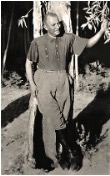
Background and Education
Reza Afshar was born in Urmia (later, Rezaieh), Azarbaijan, on October 10, 1887. His 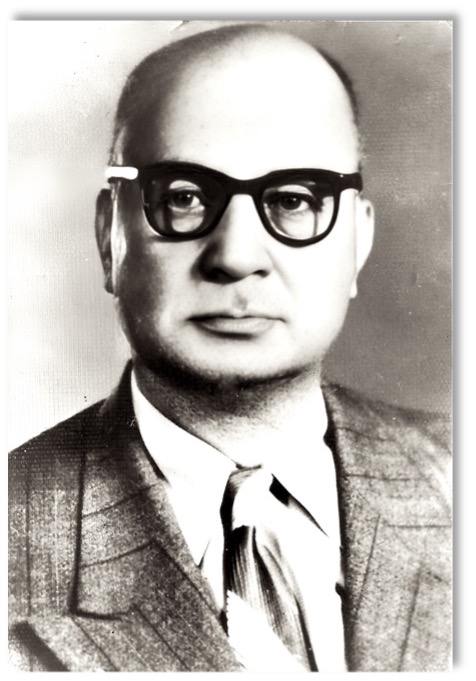 mother hailed from the Afshar tribe, a name he ultimately chose to adopt for himself. His father Mirza Shafiʿ Khan, Mosteshar ol-Molk, a landowner from the Qarib clan in Garakan near Ashtian, also served as a financial administrator in Azarbaijan, Esfahan, Fars, and Khorasan. Mirza Shafiʿ was the son of Mirza Hasan Khan Mostofi and nephew and son-in-law of Mirza Nasrollah Khan-e Vazir, Mohaseb ol-Molk, a chief accounting officer and descendant of Lotfali Khan Zand of the Azima line of the Qaribs.1Afshar identifies his parents in his memoir. See Reza Afshar, “Reza Afshar,” Salnamah-e Donya: Sal-e Payan-i Dawrah-e Istimar, 18 (1341/1962), 98-101; Reza Afshar, trans. Mahasti Afshar, “A WWI Memoir,” in Salnamah-e Donya 1340, 18 (2024), 98-101, and his relative Mirza Nasr Allah Khan vizir in a letter of introduction to his future father-in-law written at age 27. His genealogy has now come to light thanks to several books and centuries-old handwritten family trees provided by Mustafa Qarib, who was identified as a DNA relative of Mahasti Afshar on 23 and me. The books include Clifford E. Bosworth, The Ghaznavids: Their Empire in Afghanistan and Eastern Iran 994–1040 (Edinburgh: Edinburgh University Press, 1963); Abd al-Karim Qarib, Garakan (Tehran: Aftab, 1363/1984), which is also the source of the images reproduced further below; and Changiz Amini Hajibashi, Yad-e Niyakan, vol. 2 (Tehran: Ahuvan, 1382/2003). The authors express their deepest gratitude to Mustafa Qarib for his invaluable contribution to unravelling Afshar’s family history.

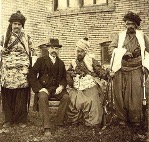
R-L. Seated: Mirza Shafiʿ Khan Qarib & his father Mirza Hasan Khan Mostofi
Standing: Mirza Esmail, son of Mirza Nasrollah Khan Ashtiani, & Mirza Shafiʿ Khan’s brother, Mirza Rafiʿ Khan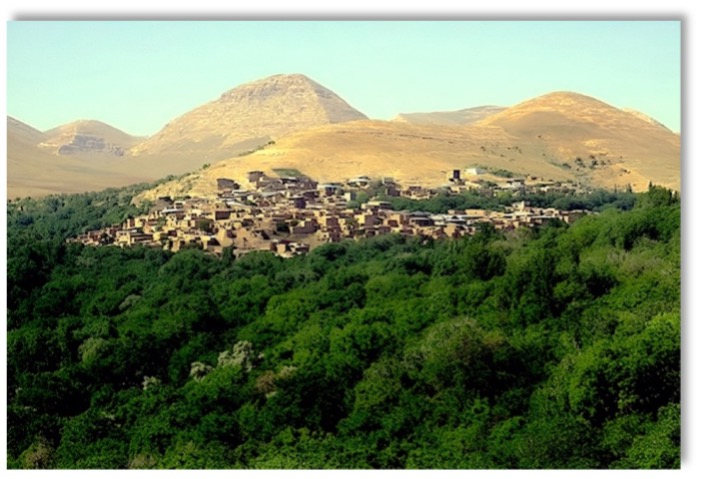
Garakan Village

Mirza Nasrollah Khan
Garakan, a suburb of Ashtian, was a popular summer retreat among visitors and retirees who enjoyed the village’s outstanding amenities, and the main seat of the Qarib family, many of whose members were mostofis, financial administrators. Over time, some among them adopted the name Mostofi after their profession, others Ashtiani after their hometown. Another Qarib branch adopted the name Azima, which Lotali Khan Zand had bestowed on two of his grandsons after his wife’s tribe, among them, Kazem Ashtiani who served under both Karim Khan Zand and Aqa Mohammad Khan Qajar, and Mirza Hasan’s father Yusef Ashtiani who was appointed Mostofi ol-Mamalek by Naser ed-Din Shah.
As the Mostofi-Ashtiani contingent grew in position and power, it came to be known as One Thousand Families, Hezar Famil, which also encompassed the Farhad, Matin-Daftari, Meykadeh, Mosaddeq, Qavam, Vosuq, and other related branches.
Reza Afshar descended from the Qaribs who trace their line to Haj Abdol Qarib in Garakan. One prominent descendant was Mirza Abdolazim Qarib (b. Garakan 1879; d. Tehran 1965), the first to write a four-volume textbook on Persian grammar and one of the earliest hires at the University of Tehran where he taught Persian language and literature to the end of his life. Learning and a professional career were the generational hallmarks of the Qaribs. Abdolazim Qarib’s father Mirza Ali was a learned scholar and a mostofi, his mother was the daughter of Mirza Esmail Mostofi and literate, and his grandfather Mirza Yusef Mostofi was as a minister under Sheikh-Ali Mirza, the son of Fath-Ali Shah.
Reza Afshar’s older son Houshang recalls in an “oral history” recorded on 30 August 1985 that:
Mirza Abdolazim Qarib knew the history of our family. According to his account, which he provided in writing, the older generation included ten or eleven brothers who died battling Kurds, Turkish Kurds, or Armenians prior to the 1906 Constitutional Revolution; only one died of a natural cause: he fell off a tree and a branch pierced his stomach. […] My father’s father [Mirza Shafiʿ Khan Qarib] migrated from Garakan to Rezaieh where he married an affluent woman [of the Afshar tribe] who owned several villages and other properties. When I was young, a group of people used to visit us in Tehran every year and ask my father to validate them as the rightful owners— or custodians—of the qanat, or qanats, that Mirza Shafiʿ Khan had donated to the locals in Garakan.2Recorded on cassette tape August 30, 1985, Afshar Family Archive. Garakan reservoir image, Qarib, Garakan, 147.
The earliest record of the Qarib lineage is found in Tarikh-e Beyhaqi, the history of the Ghaznavids in the 11th c. Continuing unbroken over the centuries, their family tree is among the world’s oldest and most meticulously preserved genealogies.

Garakan Reservoir
Built and donated by Mirza Shafiʿ Khan
According to Beyhaqi, Ali Qarib, son of Il Arsalan, was Commander-in-Chief, Hājeb-e Bozorg, of Sultan Mahmoud’s army in Greater Khorasan.3Bosworth, The Ghaznavids, 106, 110, 231-233. He is alternatively called Qarib and Khīshāvand, respectively Arabic and Persian terms for “relative”. It is not known whether the family were Turkish relatives of the Sultan or Iranian kin of his wife. When Sultan Mahmoud died, Ali Qarib, aligned with Hasanak-e Vazir in the civil domain and placed the king’s younger son Mohammad on the throne. But when the latter proved too controversial, he switched his allegiance to his older son Masud who, however, had him arrested and killed.
In the turmoil that followed, the Qaribs dispersed and migrated to Shiraz, Kerman, Esfahan, Garakan, and Ashtian where many served as mostofis, ranging from lower-ranked administrators and accountants to chancellors and vizirs. Among those that settled in Garakan, Reza Afshar’s father Mirza Shafi Qarib and his kin are still remembered for their learning and arts patronage and for building forts, mansions, mosques and other structures.4Qarib, Garakan, 54-55.
Reza Afshar completed primary school and gained English proficiency at the American Memorial School of Urmia, which was founded in 1879 by the American Presbyterian missionary Doctor Joseph Plumb Cochran. Following tradition, he also studied under Sheikh Jalil Adib ol-Ulama to gain a firm grasp of Persian and Arabic language and literature, and Islamic studies.
Dr. Cochran (2 nd L) & a Kurdish khan, c1900
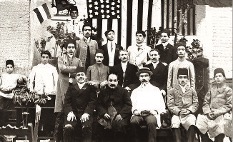
Dr. Cochran (C) at the American School of Urmia (n/d)
In 1909, he graduated from the American College of Tehran (later, Alborz High School), which had been founded by Dr. Samuel M. Jordan in 1989.
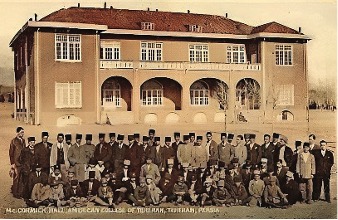
American College of Tehran, 1930
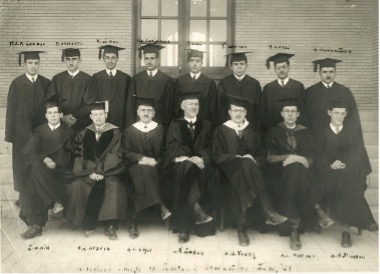
Dr. Jordan (C) with faculty & graduate students
He then left for the United States to attend Wooster College in Ohio. Reluctant to ask his father for support, he worked as a salesman and store manager to cover his college tuition and living expenses, then pursued medical studies at Valparaiso University in Indiana. But wishing to graduate from one of the best academic institutions in the U.S., he transferred to Columbia University in New York where he switched from medicine to political economy and public finance, a field in which his ancestors had excelled.
When Seyyed Hasan Taqizadeh, the exiled leader of the Democrat Party who had previously met Afshar in Tabriz arrived in New York on June 6, 1913, the two reconnected and moved in together.5Hossein Pourbaqeri, Seyyed Hassan Taqizadeh: A Political Biography (Leiden: Leiden University, 2021), 280-287, details Taqizadeh’s trip to the U.S. from Britain in 1913 and his connection with Afshar. While separated in age by ten years, they shared a vision of an independent, modernizing and secular Iran. Afshar took the opportunity to polish his Arabic by reading Jorji Zaydan’s History of Islamic Civilization with Taqizadeh and taught him English in turn. Both men being financially strapped, they welcomed an invitation by the Iranian Chargé d’affaires Ali-Qoli Khan Nabil ed-Dowleh and his American wife Florence to move into their summer home in the Catskills. Afshar tutored their children in Persian to repay their hospitality, and after they returned to New York in the fall, Taqizadeh survived by writing, translating, and temporary work in a publishing house.

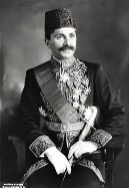

Ali-Qoli Khan Nabil ed-Dowleh; & with his wife Florence in 1914
Meanwhile, Afshar corresponded with Esmail Amirkhizi, Sadeq Mosteshar ed-Dowleh, and other intellectuals and kept abreast of developments in Iran and wrote articles in American newspapers denouncing imperialism in Asia and the Middle East. His foray into politics began when Germans took note of his impassioned tirade in the New York American in response to an Assyrian from Rezaieh who had applauded the Tsarist invasion of Tabriz and the hanging of the reformist cleric Mirza Ali-Aqa Tabrizi, Seqat ol-Islam and other constitutionalists on December 30, 1911.6JWE (2011/1390); Afshar, M. (2024): 8-9.
WWI Activism: Berlin
When the Great War erupted on July 28, 1914, Prime Minister Hasan Mostofi ol-Mamalek declared Persia’s neutrality. But Iranian sentiments were decidedly pro-German in the hope that a German victory would expel the British and Tsarist occupying armies from Persia.
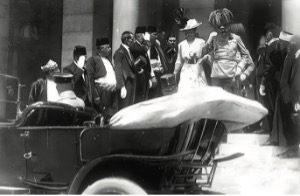
Archduke Franz Ferdinand of Austria and his wife Sophie in Sarajevo, moments before their assassination on June 28, 1914, by a Serb nationalist that on July 28 triggered WWI and the Anglo-Russian occupation of Iran.
Reza Afshar’s articles in New York American had caught the attention of the German embassy in New York, especially his critique of the 1907 Anglo-Russian Convention that had established their respective spheres of influence in Persia. The German consul contacted Afshar who, in follow up meetings with Ambassador Count Johann Heinrich von Bernstorff, the naval attaché Karl Boy-Ed, and Austro-Hungarian Ambassador Konstantin Dumba, agreed to travel to Berlin and help galvanize Muslim nationalists in Germany and Hindu prisoners of war to fight the Allies as an indirect benefit to Persia.

Afshar kept Taqizadeh informed and engaged in the talks, and the two agreed to work with the Germans. On December 31, 1914, funded by the German Foreign Office, they sailed from New York to Rotterdam from where they were to travel on to Berlin. In detailing the meetings in the February 1955 issue of the Journal of the Faculty of Literature, Tabriz University (JFLT), Afshar adds that the passengers included sixty German nationals who had been issued Persian passports by the Honorary Consul Hovaness Tokapian to protect them from British agents who routinely boarded ships on the Atlantic Ocean and detained any Germans sailing to Europe.7Afshar’s article (JFLT. Bahman 1334/Feb. 1955: 435 ff.) is a rebuttal of Taqizadeh’s claim in an earlier issue of JFLT (Azar 1333/Nov. 1954, 6/3) that the Germans contacted him first and that Afshar asked to be taken along. Noting several inaccuracies in Taqizadeh’s accounts of his life, Pourbaqeri (2021): 288 states that the “descriptions of his meetings with the Germans are garbled and differ from each other.” In his rebuttal, Afshar writes that he was first invited to meet with a German official in an upscale NYC hotel, Room 12, and later lunched with Ambassador von Bernstorff at the Plaza Hotel where they were joined by the German military attaché and the Austro-Hungarian Ambassador Konstantin Dumba. He kept Taqizadeh apprised and agreed to travel to Berlin provided he were included in the mission. Apparently, the former collaborators had a falling off over time. Five years after Afshar’s death, Taqizadeh identified him in his autobiography as “Mirza Reza Khan Dara” (Taqizadeh (1968): 176)—a name he claims Afshar went by in Europe but which is not attested in any other source—instead of “Mirza Reza Khan Afshar” as he had been known for decades.


Konstantin Dumba
Upon reaching Berlin on January 13, 1915, the Germans assigned Afshar and Taqizadeh to help transport their Muslim captives and anti-colonial Sikh and Hindu Ghadr nationalists through Iran to foment anti-British rebellion in India. Both rejected the assignment as irrelevant to Persia’s interests and proposed instead to form an association akin to the Berlin Indian Independence Committee, which was led by Indian nationalists Lala Har Dayal, Chattopadhyaya, and Abdul-Hafiz Bhopali. The German Foreign Office agreed to support the Iranian committee and further pledged to uphold Persia’s sovereignty and territorial integrity in the event of victory in war.

J. Faculty of Literature, Tabriz Univ. February 1955/1334 6 (4)
Afshar went to Geneva and recruited Iranian exiles in Europe, including Ebrahim Pourdavoud, Hossein Kazemzadeh, Nasrollah Jahangir, Saʿdollah Darvish, Ali-Naqi Ravandi, and Mahmoud Ashrafzadeh, while Taqizadeh invited Esmail Yekani, Mohammad Qazvini, Esmail Amirkhizi, Reza Tarbiat, Esmail Nobari, and others. Ezatollah Hedayat, a student in Berlin, also joined the group. The Iranian Nationalist (Melliyoun) Committee was thus formed in 1915.8Behnam (2000/1379): 7-21.

Berlin Nationalist Iranian Committee
L-R. Seated: Hasan Taqizadeh, M.-R. Mosāvāt, Hossein-Qoli Navvab, Abdolhossein Sheibani.
Standing: Mirza Aqa Naleh-ye Mellat(?), M.-A. Jamalzadeh, Abolhasan Alavi, Reza Tarbiat, M.-A. Māfi, Ezatollah Hedayat, Qassem Sur-Esrāfil, No ID.
In January 1916, Taqizadeh launched Kaveh, a widely distributed pro- German political paper to which Afshar also contributed before it grew increasingly devoted to culture.

Kaveh, 1st issue, Jan. 24, 1916
The Berlin Committee dispatched Yekani, Kazemzadeh, and Jahangir to Tehran via Russia, and Nobari, Amirkhizi, and Pourdavoud to Istanbul via Iraq to promote its cause. Afshar was dispatched to Austria and the Ottoman Empire. He spent a month in Vienna and obtained a formal pledge that Austria would respect Iran’s territorial sovereignty in the event of the Central Powers’ victory. He then traveled through Romania and Bulgaria to Constantinople.
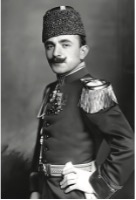
At the time, the Ottoman Empire promoted Pan-Islamism, a doctrine that sought to unite Muslims of varied ethnic and national affiliations under a single system as a shield against European colonial powers. In his two meetings with War Minister Enver Pasha Afshar strongly objected to Pan-Islamism; he emphasized that Persia was an independent sovereign state with a non-negotiable sense of national identity and asserted that though Azarbaijanis spoke Azari, they were neither the Ottomans’ cousins as Enver Pasha claimed, nor Turks.9See “Azerbaijan viii. Azeri Turkish,” in Encyclopedia Iranica for Oghuz Turkic languages: Ottoman, Azeri, the Afshar family of dialects, Khorasan Turkish, and Turkmen. The correct forms in New Persian are Āzarbaijan (āzar/ātur/ādur, “fire”) and Āzari, Parthian Āturpātakān/MP Ādurbādagān, the northern Ērānšahr province that guarded (pāt/bād/bān/bay, “guard”) one of the three Zoroastrian “Great Fires” Āzar Gushnasp (modern day Takht-e Soleiman).
He also raised objections to press reports on Azarbaijan being classified under Ottoman news, and backed by the German ambassador, obtained a guarantee that such news would henceforth appear under Persia.
WWI Activism: Tehran and Gilan
In his next assignment, Afshar headed to Kermanshah via Konya, Aleppo, and Fallujah, with a short stop in Baghdad. When en route from Qasr-e Shirin to Kerend, he was taken prisoner by Rauf Orbay, an officer of the Ottoman Special Organization, a secret intelligence, paramilitary, and police force tasked with the deportation and extermination of Armenians. Rauf Orbay suspected Afshar of being an Armenian impersonator and spy, confiscated his belongings, including the Central Powers’ pledges of support for Persia, and sentenced him to be hanged the next day. But Afshar made a nighttime jailbreak with the help of Ebrahim Aqa Khoie, returned to Baghdad and filed a complaint about receiving such a hostile treatment by a supposed ally. He then went back to the seat of the Provisional Government of Mohajerin (Émigrés), which was led by Nezam ol-Saltaneh Māfi in Kermanshah, and recovered his belongings from the Ottoman camp.

Rauf Orbay
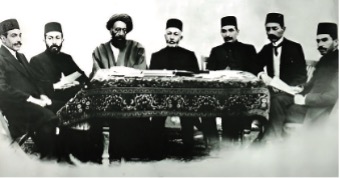
Provisional Government of Émigrés, Kermanshah.
Nezam ol-Saltaneh Māfi (C) and his six-member cabinet.
(3 rd L): Minister of Justice Seyyed Hasan Modaress.
Afshar assembled a band of partisans together with fellow Berliner Saʿdollah Darvish and engaged in guerilla operations against the British and the Lorestan tribes that supported their interests in oil fields, roads, and transportation, and was wounded in the process. In the end, the and the partisans failed to achieve their goals and dispersed. Afshar went to Tehran and handed the Central Powers’ pledge letters, plus Mamalek, head of the central government. He then left for Urmia to cultivate his family lands and married Sariyeh Azarbgi.Their first child Maliheh was born on July 19, 1917, and their second, Houshang, on November 12, 1918, the day news of the Armistice to end the Great War reached Persia.

Saʿdollah Darvish
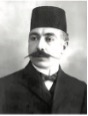
Mostofi ol-Mamalek
In 1919, Afshar was appointed treasurer of Gilan by the central government. By then, the province was under the control of Mirza Kuchak Khan who in 1915 had formed a guerilla force of 50-100 Jangalis (Forest People) and operated through the Islamic Unity Council in Rasht. Supported by constitutionalist landowners, merchants, the peasantry, and the ulema, his mission was to liberate Iran from Tsarist and British imperialism and Qajar autocracy. The Jangalis had grown in number and fire power in 1917 by absorbing disbanded Cossacks, Ottoman prisoners, and the arms left behind by White Russians after the Tsarist army withdrew from Gilan.
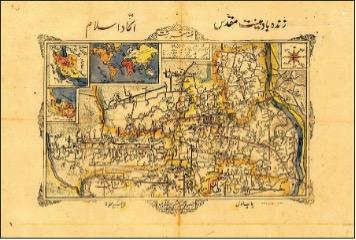
“Long Live the Holy Islamic Unity Council. Map of Rasht.”
First edition, March 11, 1918. Cartography: Ali-Asghar (Vahid) Kermanshahi, Principal, Ferdowsi School
Mirza’s relationship with Tehran grew increasingly fraught after the October Revolution, politically and on the battlefield, as each side tried to navigate rival imperialist pressures and incentives to its own advantage. Equally wary of the Soviets and the British, Afshar, a nationalist who espoused socialist reforms, supported Mirza’s anti-imperialist mission.

Kuchak Khan before the Jangal movement

Gilan forest
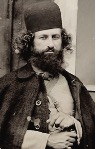

Kuchak Khan and his Jangali militia
But by 1919, Kuchak Khan had aligned with his leading communist confederates Haydar Khan Amu-oghli and Ehsanollah Khan Doustdār and grown heavily dependent on Soviet funding and arms. Ideological differences among the movement’s political factions had generated internal conflicts in Mirza’s camp and fanned discontent among non-revolutionary landowners, merchants, and the ulema. In February, Prime Minister Vosuq ed-Dowleh sent the educator Mohammad Tadayyon and later the constitutionalist cleric Haji Aqa Shirazi to persuade Mirza to abandon the communist cause and the Bolsheviks. Those missions failed.

Hasan Vosuq ed-Dowleh
PM Aug. 8, 1918-July 3, 1920
A final meeting with the Jangalis was held in Rasht at the request of the British backed by Iranian nationalists in Tehran. The British delegation included R.S. Oakshott of the Imperial Bank of Persia, George Stokes of the Foreign Office, and Colonel Smyles of the British army. The Russian consul in Rasht Basil Nikitin was also present.10The meeting is detailed in Reza Afshar: A WWI Memoir. See Afshar, M. (2024): 30. Afshar, the plenipotentiary representative of the Islamic Unity Council and his Jangali colleague Dr. Abolqassem Farid Lahijani negotiated the terms of an agreement that guaranteed Mirza’s uncontested authority over an expanded region and prohibited the British from breaching his territorial boundaries without his permission. Afshar and Dr. Farid then presented the proposal to a closed-door meeting of the Islamic Unity Council.

Dr. Abolqassem Farid
Mirza was initially in favor and asked for a written pledge from the nationalists in Tehran. But when the pledge arrived, he changed his mind and rejected the proposal. Anticipating the consolidation of Soviet power in Gilan, Dr. Farid quit and retired to his home in Rasht and Afshar resigned as treasurer and left for the capital. Afshar’s departure cut off continued state funding to the revolutionaries, which was promptly spun into a rumor that he had fled with the treasury and turned him in the words of Joseph S. Iseman into a “high-ranking target of Russian terror.”11Iseman (1991): 83/6. Iseman graduated Yale Law School in 1941 and after serving in the U.S. Army Air Force 1942-1945, became managing director of Iran Air in 1946. He is cited by Atrvash (2007): 111. The vengefulness damaged Afshar personally but his larger concerns proved far more consequential.
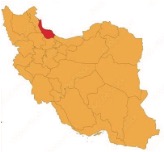
On June 4, 1920, the 11th battalion of the Soviet Red Army entered Rasht. On June 5, sharing the podium with Ehsanollah Khan at the first Congress of the Iranian Communist Party, Mirza Kuchak Khan declared the Soviet Socialist Republic of Gilan12Genis (2002) introduces key players in Jangali-Bolshevik relations, the birth of the Gilan Soviet Republic, and the eventual Anglo-Russian entente leading to Kuchak Khan’s demise. See also Dailami (2012) for a history of the Jangali movement and his article (1990) on the complex of Bolshevik-Jangali relations. and proclaimed: “This national force has now entered the state of the Red Revolution with the help and assistance of all the humanitarians of the world and the staying power of the just principles of socialism.”13Dailami (1990): 55, also states (fn. 92) that the original proclamation is housed in the British and German archives.

Saʿdollah Darvish, Commander of the Revolutionary Army (standing far R)
L-R seated: Abukov, Pilyasky, Mirza, Kazhanov, Gauk. Front row: Khalou Qanbar, Khalou Morad Bozorg

“Revolutionary Stamp,” Soviet Socialist Republic of Iran depicting the blacksmith Kaveh who topples Zahhak in the Shahnameh, brandishing a red flag and a hammer

Ehsanollah Khan Doustdār
The Gilan Republic was short-lived. On July 19, 1920, Kuchak Khan was pushed aside. Ehsanollah Khan proceeded to enforce land seizures and other communist doctrines, which led countless Jangalis to abandon the movement. The mortal blow came later the same year when the Soviets entered into a trade agreement with the British and abandoned the Gilan Republic. Soon, the revolutionary movement ruptured into a deadly internecine fight. The trigger was a Red Army rumor that Haydar Khan Amu-oghli had fled Baku with stolen Russian jewels and was heading for Gilan. Mirza suspected a coup and on Sep. 29, 1921, the building where Haydar Khan had assembled his group for a meeting with the Jangalis was set on fire.14Ahrar (1343/1964): 540-548, asserts without conclusive evidence as do other writers, that Mirza personally planned the fire. The book derives from published sources (p. 591) but being a historical novel should be consulted with caution. In reaction, Ehsanollah Khan attacked the Jangalis with his Kurdish and Russian forces. Both sides sustained heavy losses.
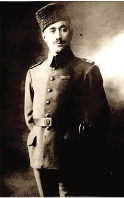
Haydar Khan Amou-oghli Tariverdi
The end came in the winter when the Persian Cossack Brigade led by Reza Khan routed the surviving resistance, which disbanded and scattered. Isolated, Kuchak Khan fled into the mountain where on December 2, 1921, he was trapped in the snow and froze to death, a bitter end indeed for a national hero who had once dreamed of liberating Gilan.
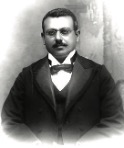 Meanwhile, Afshar’s detractors indulged in victimizing him, indiscriminately and without evidence. The British spy Ardeshir Ji Reporter15Khaza’i (1390/2011): 62-63. who viewed him as a threat to the interests of his British masters added that he was a Baha’i, an allegation that as with theft could be denied but not disproven; he also called him a Freemason, which belies Afshar’s lifelong hostility toward the secretive organization, most famously in a Majles speech on May 1, 1955, where he denounced Freemasonry as an internationalist “political party at the service of foreign powers, in particular England.”16Mozakerat-e Majles-e Shora-ye Melli, Dowreh 18, Jaleseh-ye 115, Yekshanbeh, Ordibehesht 10, 1334 (May 1, 1955): 3.

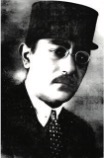
Ali-Akbar Davar
Other writings include the purported memoir of SAVAK Deputy Director Hossein Fardoust,17Shahbazi (1369/1990): fn. 82, which illustrates the questionable veracity of Fardoust’s memoir. which adds the story that having left Gilan, Afshar went to the U.S. and became a carpet merchant. In fact, Afshar went to Tehran where he joined Ali-Akbar Davar and helped him develop and lead the 300-member Radical Party to promote modernization, centralization, and legal reforms.18Aqeli (1990) and (1389/2011): 33.
There is also Saʿdollah Darvish who as Commander of the Revolutionary Armyin Gilan had a personal axe to grind against Afshar for depriving the revolutionaries of state funding.
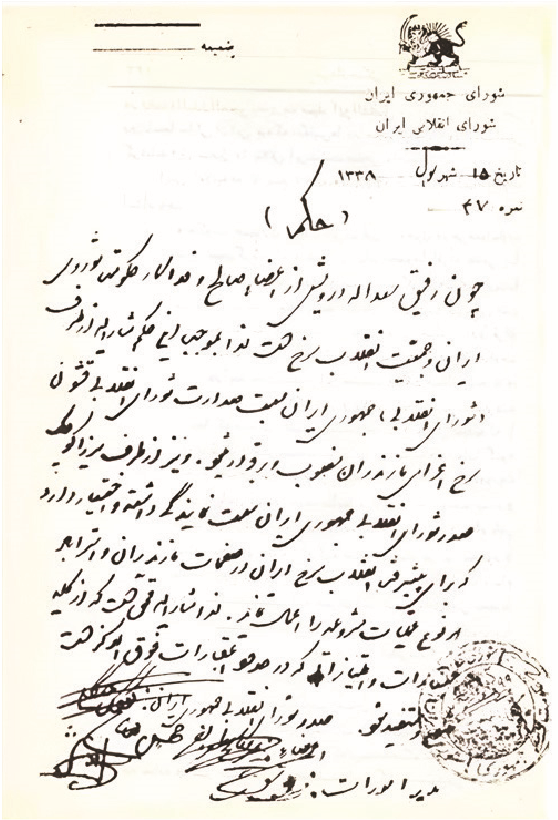
L. DECREE. September 6, 1920: “Comrade Saʿdollah Darvish, a trusted and selfless member of the Soviet Republic of Iran and the Red Revolution . . . is authorized to execute the Red Revolution in Mazandaran and Astarabad”—signed and sealed on a “Soviet Republic of Iran” letterhead by Kuchak Khan, head of the “Revolutionary Council of the Iranian Republic.”
The irony is not lost on the reader of Darvish’s memoir that a former nationalist turned Soviet flagbearer should call Afshar a “traitor at the service of foreign agents” and attribute the alleged loss of 84,000 Tomans of Jangali funds to him in absentia.19Several other misrepresentations of individuals, events, and dates are noted in Dr. Fereidun Shayesteh, “Introduction and Overview: The Memoir of Saʿdollah Darvish, Mirza Khoucak Khan’s Companion,” Hekayat-e Gilan (online), 20/03/1401 (June 10, 2022).
Over the years, other insiders and outsiders from the same tale without a shred of evidence, peddled Ebrahim Fakhra’i who had joined the Jangalis with a 10th grade diploma and was appointed commissioner of culture, to Cosroe Chaqueri who earned a doctoral degree in history from the Sorbonne in 1980.20Fakhra’i (1354/1975): 140-141; and Chaqueri (1995): 459. Afshar’s is not the only dubious story in Jangali historiography, which is characterized by Janet Afary as incohesive compendia that “reflect the political sentiments and ideological allegiances of the historians themselves.”21Afary (1995): 3. She further states (p. 21) that while earlier historians emphasized the Jangalis’ nationalist credentials, “Since the 1978-79 revolution, the government has portrayed the Jangal Movement, and specifically Mirza Kuchik Khan, as an ideological forerunner of the Islamic Republic.”
Afshar moved on from Gilan and pursued public service, first under Ahmad Shah Qajar, then under Reza Shah and Mohammad-Reza Shah Pahlavi. In the process, he acquired an adversarial triad, the Tudeh Party, Iranian politicians beholden to the British-run oil industry, and Freemasons.
Public Service
Mirza Reza Khan Afshar (1887-1964) was a Majles deputy from Urmia and Tabriz, minister of roads and transportation, and governor of Gilan, Kerman and Esfahan between 1923-1955. In 1944, while banned from public service, he pioneered Iranian Airways, the first commercial airline in Iran, which he served as chairman and CEO until the company was nationalized in 1962.
War Minister Reza Khan had come to know Afshar through his work with Ali-Akbar Davar—whose daughter Afsar Khanom married the brother of Afshar’s wife Hashem Khan Azarbegi. Afshar’s eldest son Houshang recalls, “Sardar Sepah visited us at home when I was a child. I remember standing at the door and bowing our head.”22See fn. 2 above

Mohammad-Reza Shah

Reza Shah

Ahmad Shah
In November 1922, carrying a letter of introduction from Reza Khan, Afshar went to meet with Iran’s new Administrator of Finance Arthur C. Millspaugh and was hired as his deputy and chief interpreter given his expertise in finance and “excellent command of English.”23Millspaugh (1925): 36, 41. Reza Khan became Sardar Sepah, Commander of the Army, in February 1921 and War Minister in April of the same year. The three met in his home later where Reza Khan agreed to relinquish control of the War Ministry’s treasury and centralize the financial system. In due course, Millspaugh arranged a bank loan, established a budget, and set about collecting taxes. Within a short time, the demoralizing government debts and long-delayed pensions and salaries of the employees and the army had been paid off.24Millspaugh, 47-49. Millspaugh served until 1927 before returning to the U.S. The 13th Majles invited him back in 1942 but he was unable to reconcile internal and foreign rivalries and was terminated in 1945.
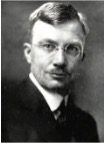
Arthur Millspaugh
In 1923, Afshar was elected to the Fifth Majles as the first-time deputy from Urmia, re-elected to the Sixth, and appointed Speaker of the Seventh Majles, the Constitutional Assembly that on December 15, 1925, abolished the Qajars dynasty and installed Reza Shah Pahlavi as monarch.
 Reza Afshar (standing, 3 rd R), Sixth Majles 1305-1307 (1926-1928)
In 1926, Reza Afshar was named Gilan’s financial administrator. In 1930, Prime Minister Mehdi-Qoli Hedayat appointed him governor of Gilan, and in 1931, of Kerman. Throughout, he supported Reza Shah’s policies designed to centralize, modernize and secularize the state, specifically, build a strong bureaucracy, judiciary, and military; promote a unified identity with Persian as the common language; and prompt economic growth by developing the infrastructure—railways, roads, and schools.

Reza Afshar & son Houshang (far R)
Rasht c1926
In February 1932, he became minister of roads and transportation, and from July of the same year, through 1935, governor of Esfahan. His achievements in that post are catalogued in “Esfahan Should Mourn Afshar’s Death, a three-page essay published in 1964 by the noted scholar and former editor-in-chief of Bākhtar Amir-Qoli Amini.25Amini (1342/1964): 1-3, and Bākhtar, Iranica online.
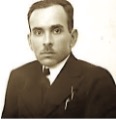
Amir-Qoli Amini
Briefly, Afshar’s development projects were transformative. The textile industry grew so robust as to turn Esfahan into the “Manchester of Iran” ahead of Tabriz; he improved the healthcare system, formed a Red Lion & Sun Society in Esfahan, and built an orphanage. He also stealthily galvanized the citizens against the Anglo-Iranian Oil Company, brought Bakhtiari tribes under control, and nullified both British and Russian ambitions that compromised Iran’s national interests.
Amini adds, however, that his “most important step, which also led to his downfall,” was to redirect the water from Kuhrang to Zāyandeh-rud to enhance development in the province. But his plan was at odds with British shipping interests in Karun River. To prevent its implementation, Afshar was summoned to Tehran in January 1936 and imprisoned without cause or explanation.
Four months and twelve days later, he was hit with a petty bribery charge of 320 Tomans backdated to 1932, a tactic commonly used under Reza Shah to remove political opponents. To cite Baqer Aqeli, the most learned historian of contemporary Iran, “[Afshar] had reportedly committed a financial offense, but it must be noted that high ranking politicians have never been tried on political charges but have always been viciously smeared and accused of bribery and dishonesty and embezzlement. Victims of this practice include Tadayyon, Teymourtash, Nosrat ed-Dowleh, and Soheili.”26Aqeli (1380/2001): 153.
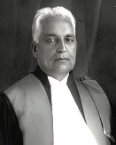
Mohammad Tadayyon
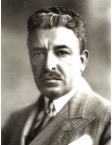
Abdolhossein Teymourtash

Firuz Mirza, Nosrat ed-Dowleh
Pointing to victims of political purges under Reza Shah, the Imperial Army Chief of Staff General Zarghami recounts in Mostafa Alamouti’s Iran in the Pahlavi Era that Afshar once saved the Shah’s life when he uncovered and alerted him to an assassination plot near Chalus by Bakhtiari chiefs. The General then adds, “It is astonishing that they recognize Afshar and promote and appoint him minister, then fabricate a file of graft and corruption as they did against Teymourtash, and then jail, sentence, and bar him from public service for life.”27Alamouti (1369/1990): 368-369.
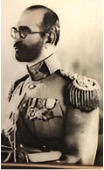
Gen. Azizollah Zarghami
Afshar was convicted in May 1936 and disbarred from government service for life. With his political career unduly interrupted, Afshar turned to cultivating his family lands in Azarbaijan.

Gholam-Ali Farivar
In spring 1944, reappointed him governor of Esfahan Afshar and whose Mardom newspaper organized when the Tudeh Party, then at the height of its power, had engineered a city-wide turmoil and workers strike in Esfahan, from Tehran Gholam-Ali Farivar, a native of Esfahan and member of the central committee of the Comrades Party, Hezb-e Hamrahan, which had backed the Tudeh Party in the turmoil, objected to Afshar’s appointment citing his past disbarment from public service.
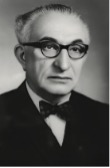
Mostafa Fateh
The roots of Farivar’s dissension were more tangled, however. Comrades Party was founded in November 1942 by Mostafa Fateh who served as deputy director of the Anglo-Iranian Oil Company and whose Mardom newspaper became an organ of the Tudeh Party. Earlier in January, Fateh “had organized the Iranian Anti-Fascist Society, Jam ‘iyat-e zedd-e Fashist-e Iran, which had been set up by the British and Russians” and served both British and Tudeh Party interests in the period of Anglo-Russian cooperation in WWII. The dual agenda, which included fomenting instability at the behest of the British Intelligence Service, led Tudeh Party leaders like Bozorg Alavi and Ehsan Tabari to be labeled Tudeh Nafti (Oil Company Tudeh’i).28Aqeli (2012).
Afshar’s quarrels with the British in 1932 over the water course in Esfahan and his showdown with the Tudeh Party over labor strikes in 1944 came full circle via Tudeh Nafti deputies who on May 16, 1944, censured the government of Prime Minister Mohammad Sa’ed in order to block Afshar’s reappointment as governor of Esfahan.29Mozakerat-e Majles-e Shora-ye Melli, Dowreh 14, Jaleseh-ye 30, Seshanbeh, Ordibehesht 26, 1323 (May 16, 1944): 488-506.
Sa’ed defended his decision to reinstate Afshar. “My responsibility is to ensure stability and security…I was concerned about his past conviction but in consultations with authoritative figures was assured that he was now free to serve. The citizens of Esfahan had also sent a telegram pleading for Afshar’s appointment, saying his high-mindedness and leadership skills would restore order . . . Esfahan was on fire, a situation that could have spread to other far-flung regions. That fire has now been extinguished.” Others defended Afshar on legal grounds. Seyyed Ahmad Shariatzadeh, a jurist consultant from Babol argued that having already served time and paid a fine, Afshar stood rehabilitated. Minister of Justice Sheikh Asadollah Mameqani considered Afshar’s original sentencing invalid as the evidence against him had been questionable. The accuser had since recanted and received a pardon; however, the Constitution prohibited rescinding convictions against ministers. The deputy from Khānsār Abdollah Moazami, citing Ali Akbar Davar, proposed the case be reviewed by an appeals court and urged the deputies to also take Sa’ed’s personal integrity and intention in appointing Afshar into account when voting. But in the tense discussions that followed, the Tudeh-British alliance prevailed in the vote count and Afshar was again barred from public service.

Mohammad Saʿed

Sheikh Asadollah Mameqani

Ahmad Shariatzadeh
After Reza Shah’s abdication in 1941 and changes to the state apparatus, Afshar who had launched a private airline company in 1944, more on which below, was elected to the 18th Majles from Tabriz. He was also appointed to the Oil Consortium Committee, which was tasked with oversight of the 1954 consortium agreement that Mohammad Reza Shah had signed with Western oil companies.30The Consortium Agreement was signed under pressure by President Eisenhower. It gave 40% ownership and the rights to the production and sale of Iranian oil to American, BP, the Dutch Shell, and the French CFP and was renewable for another 15 years. In June 1973, the Shah forced an overhaul of the agreement whereby the National Iranian Oil Co. (NIOC) took full ownership and control of the oil facilities, exploration, refinement, and sales, and the foreign Consortium members were downsized to privileged customers.
When the Majles convened on May 5, 1955, under Prime Minister Hossein Ala, Afshar took the opportunity to explain the circumstances of his 1936 conviction for the record, here edited for brevity.
“I have spent over twenty of the best and most precious years of my life serving this country with integrity . . . as the governor of Gilan, Kerman, and Esfahan, minister [of roads and transportation] and three terms Majles deputy. I was arrested in 1314 (1935) owing to my decision to connect Kuhrang to Zayandeh-Rud, which would have spurred development in the region. I was willfully imprisoned, evidently because my plan was at odds with the shipping interests of foreign agents. Uninformed about my charge, I was locked up for four months and seventeen days in a cell that had an entrance but no exit. Mr. Arsalan Khalatbari who is here today is witness to what happened next.
I was taken to the Security Office (Taminat) Branch #3 where I was handed a notice prepared by the director who said I must sign it if I wished to be released. Remember that “must” meant Must in those days; disobedience would have meant an indefinite time behind bars. I signed, acknowledging receipt.
The High Court then proceeded to charge me [with bribery] based on that signed receipt. On day two of the trial, my attorney Dr. Aqayan told me that given the nature of the process, he was unable to defend me. Mr. Khalatbari then offered to represent me, but in assessing the situation, my conscience would not let me risk ruining the future of a young man. Instead, I decided to act pro se. I will not repeat the proceedings here as you all familiar with it. But briefly, the court portrayed me as a Jean Valjean, handed me a yellow slip to make the foreign agent happy, and barred me from public service for life. I urge and give my permission to this body to review my long years of public service. If I am found guilty of any crime, I give my word I shall not resort to the statute of limitations.”31Mozakerat-e Majles-e Shora-ye Melli, Dowreh 18, Jalesseh-ye 117, Panjshanbeh, Ordibehesht 14, 1334 (May 5, 1955): 1-2.
Private Enterprise
Afshar, now disbarred from public service, turned his focus on cultivating his family estates and as noted in the Journal of the World of Economics (JWE) became a wealthy man.32Editor, JWE (1390/2011): 1. In December 1944, he pioneered Iranian Airways, the first commercial airline in the country, and as the lead co-founder of the private enterprise, came to be known as the “Father of Commercial Aviation in Iran.”33Atrvash (1386/2007): 110-156; (2008) & (2010). See also Khachikian (2011): 61, and 69-77 where he corrects several errors in Atrvash’s account of Iranian Airways, and attributes them to his being employed by the nationalized airline and personally devoted to the new CEO General A.-M. Khademi whom he praises to the point of idolization.
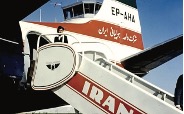
Iranian Airways, registered as “Iran Air” with the International Air Transport Association (IATA), was formed with an investment of fifty million Rials by twenty individuals. Afshar who was the largest shareholder and board chairman was also a founding partner of Irantour, the first Iranian travel and tour agency.

Four-engine Douglas DC-6B
Iranian Airways logo

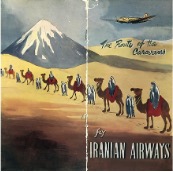 In 1946, Iran Air launched its first flight to Mashhad on a 2-engine DC-3, followed by other cities in Iran. The company’s success prompted Russia to abandon domestic passenger flights in Iran using converted military aircraft. In early 1947, Iran Air added 4-engine Douglas DC-6B aircraft to its DC-3 fleet and flew to Athens, Baghdad, Beirut, Damascus, Frankfurt, Geneva, Istanbul, London, Paris, and Rome, and east to Bombay, Kabul, Kandahar, Karachi and Tokyo. The company co-founder Gholam-Hossein Ebtehaj served as executive director; Afshar’s older son Houshang Afshar (M.Sc. Elec. Eng., Birmingham Univ.) as VP Technical Operations, and Houshang Tajaddod as VP Administration.
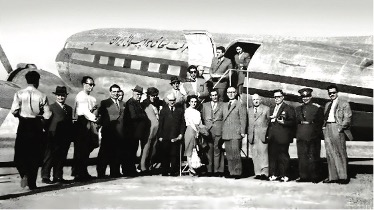
Inaugural Iran Air flight Tehran-Mashhad. May 16, 1946
Houshang Afshar (far R) and Gholamhossein Ebtehaj (3 rd R)
The company contracted Trans World Airlines (TWA) and while operating with American and French flight and ground crews and aviation maintenance technicians, launched a training program for Iranian personnel under Captain John Waterman. Initially headquartered on 545 Saʿdi Avenue, Iran Air relocated to Afshar’s private property on Bank Bazargani Street, a cul de sac off Saʿdi, in 1952.

TWA Captain John Waterman (5 th R)

DC-3 in Khorramshahr. Nov. 2, 1946
Photo: Sonia Avakian. Leopold, her son (front C)

Abadan baggage tag, Mrs. Avakian
Afshar dismissed Ebtehaj in 1954 for having unilaterally cancelled the TWA contract in favor of the French CGT. Taking on the CEO role himself, he contracted American Transocean Airlines to help with operations and to train a full class of Iranian pilots and aviation professionals.
Douglas DC-3 at Manchester Airport


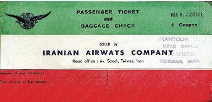

Domestic & international Ticket and baggage checks
Meanwhile, Mohammad Sa’ed, Afshar’s next-door neighbor Sardar Fakher Hekmat, and other statesmen continued to visit him at home. One outsider was Aga Khan III who had been awarded Iranian citizenship in 1950. Then a first grader, I remember sitting on his substantial lap in the garden terrace listening to their animated exchanges about modern education and progress and Darwin—subjects I could not absorb—and women’s rights, which excited my mind to no end.

Aga Khan III on his first trip to Tehran, Feb. 2, 1951
Afshar met with V.K. Krishna Menon, India’s top diplomat and future  defense minister in the early 1950s and negotiated an exclusive contract for Iran Air to fly passengers from India to Jeddah for the annual Hajj pilgrimage, which ensured a significant revenue stream for the company. In 1956, fully staffed by Iranian technical and service crew, Iran Air moved its operations and fleet of seventeen Douglas DC-3, DC-4, DC-6, DC-6B, and 4-engined turboprop British Vickers Viscounts to Mehrabad V.K. Krishna Menon (L) & Reza Afshar, Airport, a former military airfield early 1950s upgraded with a new terminal building and asphalt-paved runways.
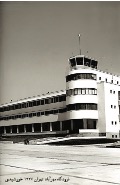
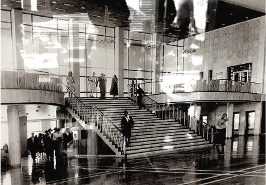
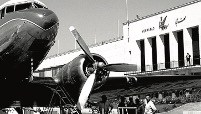
Mehrabad Airport, Tehran 1958
When the first artificial Earth satellite Sputnik I was launched on October 4, 1957, Russian Migs diverted an Iran Air DC-4 cargo plane that while en route from Beirut to Tehran had entered Soviet territory and shot it. But with two left engines on fire and the body damaged, the pilot landed the aircraft on Chamkhaleh Beach near Rasht with the crew unscathed and the cargo intact.34Khachikian (2011): 105.
During 1958-1960, Afshar began negotiating the purchase of French Caravelle jets and the handling of Scandinavian Airlines (SAS) flights in Iran, but his plans were thwarted in a contentious takeover bid that led to the company being nationalized in 1962.

Front R-L: Reza Afshar & S. Kalhor on the tarmac, c1960
Back: Soudabeh and Hamid Qajar, Afshar’s daughter and son-in-law
Iranian Airways Nationalized
In 1960, Ahmad Shafiq, Princess Ashraf’s husband and head of Pars Air, a small airline that flew rental cargo planes and owned no aircraft or property of its own, proposed a merger with Iran Air, with Pars Air as the major shareholder.35Atrvash (2007): 157-158. Afshar rejected the proposal as inane and threw him out of his office. The pressure did not subside, however. On January 20, 1962, Prime Minister Ali Amini sent a “Strictly Confidential” draft letter to the Ministry of Roads, copied to the War Ministry, suggesting the state purchase 49% of Iran Air.36Iran Air Nationalization: Official Correspondence, Afshar Family Archive. The official version proposed that a national airline be formed with 50% of the shares owned by the state, 20% each by Iran Air and Pars, and 10% by the public. When Afshar rejected the terms and refused to compromise, the state proceeded to nationalize Iranian Airways.
Following standard protocol, BOAC and SABENA jointly apprised Iran Air and valued it at $20M. But the state arbitrarily reduced the valuation to $3M and remunerated the Afshars only incrementally over twelve years. It also taxed the payout at 50%, a rate that by law applied only to accidental income where neither party has exerted itself substantially, such as in lottery winnings, whereas Iran Air had taken eighteen years and considerable effort to build, staff, and operate.37Atrvash (2007): 157, misstates that Afshar received a full payout upon nationalization and in general idolizes General Khademi. Khachikian (2011): 69-77, ascribes Atrvash’s numerous errors and biases to his position as an executive at the nationalized company. Afshar and his son contested the illegal tax rate in a series of well-reasoned communications, but their efforts were in vain.
The nationalized airline was renamed “Homa” but was obligated by IATA to retain “Iran Air” as its official designation. Led by Lt. Gen. Ali-Mohammad Khademi, Homa began operations on April 21, 1962. Reza Afshar formally resigned four days later.
Personal life
Reza Afshar was married to Sariyeh, daughter of Zahra Soltan and Abolqassem Azarbegi, Seraj ol-Mamalek. The hereditary title Azar–beg (‘Azarbaijan official’) was borne by his lineage, identified in historical records as overseers of royal estates, religious affairs, and land deeds since Nasser ed-Din Shah. Abolqassem Khan completed his studies in France at the behest of his father Mohammad, an importer of stained glass and crystalware who frequently traveled abroad.


Seraj ol-Mamalek in his youth

Zahra-Soltan & Seraj ol-Mamalek
Abolqassem Khan was in charge of educating Crown Prince Mohammad- Ali Mirza in Tabriz in French and science. A Mozaffaredin Shah award letter dated May 1901 bearing his seal on top (below, R) and the waxed seal of Atabak-e Aʿzam in the back states that in recognition of his lifelong service in the education of the crown prince and due endorsement by Amin ol-Soltan, Atabak-e Aʿzam (Grand Vizier), he is being awarded “a Class II bejeweled shamseh (sunburst), a token of the highest distinction to be worn with pride and dignity as he selflessly discharges his duties.” A “Lion & Sun” medal and award letter followed in 1908, two years after the signing of the Constitution.

Class II Sunburst
 The Azarbegis’ eight children attended the American Memorial School of Tabriz (L, n/d), a co-ed founded in 1811 by William Wilson where they also learned French; the five girls were also privately tutored in music. Sariyeh graduated from the Iran Bethel School for Girls, the precursor of Damavand College (est. 1968), and supported it until 1979 when the former principal Miss Jane E. Doolittle, then eighty and running a clinic for the needy in southern Tehran, returned to the U.S. after fifty years of service.38On her last visit in 1979 to pay her alumni dues, Sariyeh Afshar urged Miss Doolittle (b. 1899) that it was time to leave, to which she replied: “But where am I to go?” pointing to the host of patients in the courtyard waiting to be treated. “These are my family.” I was privy to the exchange as I had driven my grandmother to the clinic; I also knew Miss Doolittle from childhood for she was the principal of my school, Mehr, which three generations in my family attended.

L-R. Seated: Sariyeh, Kambiz, Reza Afshar
Standing: Maliheh, Azar, Sudabeh, Houshang

Sariyeh Azarbegi (Afshar) c1950
Reza Afshar passed away on Wednesday, February 5, 1964, and was buried in Emamzadeh Abdollah in Ray, southern Tehran.
A memorial note in English signed by “An American Friend” in a Tehran daily reads: “This complex, controversial individual will be remembered by many as the Father of Commercial Aviation in Iran. Tough-minded, resolute, sometimes in tractable, he was perhaps twenty years ahead of his time, and too much in a hurry to span the two decades.”
Reza Afshar was also industrious. In his seventeen years as head of Iranian Airways, he was up at 4:00 AM every working day and the first at his desk at 6:00 AM. With Azari Turkish as his mother tongue, he had native-language proficiency in Persian, Arabic, and English, and competence in French. A consummate reader, poet, and essayist with an extensive library at home, he was also known for his translation of Shakespeare’s Comedy of Errors39Ghani, Cyrus (2008): 166. and given his keen interest in Darwinian evolution, H.G. Wells’ The War of the Worlds.
[1]Afshar identifies his parents in his memoir. See Reza Afshar, “Reza Afshar,” Salnamah-e Donya: Sal-e Payan-i Dawrah-e Istimar, 18 (1341/1962), 98-101; Reza Afshar, trans. Mahasti Afshar, “A WWI Memoir,” in Salnamah-e Donya 1340, 18 (2024), 98-101, and his relative Mirza Nasr Allah Khan vizir in a letter of introduction to his future father-in-law written at age 27. His genealogy has now come to light thanks to several books and centuries-old handwritten family trees provided by Mustafa Qarib, who was identified as a DNA relative of Mahasti Afshar on 23 and me. The books include Clifford E. Bosworth, The Ghaznavids: Their Empire in Afghanistan and Eastern Iran 994–1040 (Edinburgh: Edinburgh University Press, 1963); Abd al-Karim Qarib, Garakan (Tehran: Aftab, 1363/1984), which is also the source of the images reproduced further below; and Changiz Amini Hajibashi, Yad-e Niyakan, vol. 2 (Tehran: Ahuvan, 1382/2003). The authors express their deepest gratitude to Mustafa Qarib for his invaluable contribution to unravelling Afshar’s family history.
[2]Recorded on cassette tape August 30, 1985, Afshar Family Archive. Garakan reservoir image, Qarib, Garakan, 147.
[3]Bosworth, The Ghaznavids, 106, 110, 231-233.
[4]Qarib, Garakan, 54-55.
[5]Hossein Pourbaqeri, Seyyed Hassan Taqizadeh: A Political Biography (Leiden: Leiden University, 2021), 280-287, details Taqizadeh’s trip to the U.S. from Britain in 1913 and his connection with Afshar.
[6]JWE (2011/1390); Afshar, M. (2024): 8-9.
[7]Afshar’s article (JFLT. Bahman 1334/Feb. 1955: 435 ff.) is a rebuttal of Taqizadeh’s claim in an earlier issue of JFLT (Azar 1333/Nov. 1954, 6/3) that the Germans contacted him first and that Afshar asked to be taken along. Noting several inaccuracies in Taqizadeh’s accounts of his life, Pourbaqeri (2021): 288 states that the “descriptions of his meetings with the Germans are garbled and differ from each other.” In his rebuttal, Afshar writes that he was first invited to meet with a German official in an upscale NYC hotel, Room 12, and later lunched with Ambassador von Bernstorff at the Plaza Hotel where they were joined by the German military attaché and the Austro-Hungarian Ambassador Konstantin Dumba. He kept Taqizadeh apprised and agreed to travel to Berlin provided he were included in the mission. Apparently, the former collaborators had a falling off over time. Five years after Afshar’s death, Taqizadeh identified him in his autobiography as “Mirza Reza Khan Dara” (Taqizadeh (1968): 176)—a name he claims Afshar went by in Europe but which is not attested in any other source—instead of “Mirza Reza Khan Afshar” as he had been known for decades.
[8]Behnam (2000/1379): 7-21.
[9]See “Azerbaijan viii. Azeri Turkish,” in Encyclopedia Iranica for Oghuz Turkic languages: Ottoman, Azeri, the Afshar family of dialects, Khorasan Turkish, and Turkmen. The correct forms in New Persian are Āzarbaijan (āzar/ātur/ādur, “fire”) and Āzari, Parthian Āturpātakān/MP Ādurbādagān, the northern Ērānšahr province that guarded (pāt/bād/bān/bay, “guard”) one of the three Zoroastrian “Great Fires” Āzar Gushnasp (modern day Takht-e Soleiman).
[10]The meeting is detailed in Reza Afshar: A WWI Memoir. See Afshar, M. (2024): 30.
[11]Iseman (1991): 83/6. Iseman graduated Yale Law School in 1941 and after serving in the U.S. Army Air Force 1942-1945, became managing director of Iran Air in 1946. He is cited by Atrvash (2007): 111.
[12]Genis (2002) introduces key players in Jangali-Bolshevik relations, the birth of the Gilan Soviet Republic, and the eventual Anglo-Russian entente leading to Kuchak Khan’s demise. See also Dailami (2012) for a history of the Jangali movement and his article (1990) on the complex of Bolshevik-Jangali relations.
[13]Dailami (1990): 55, also states (fn. 92) that the original proclamation is housed in the British and German archives.
[14]Ahrar (1343/1964): 540-548, asserts without conclusive evidence as do other writers, that Mirza personally planned the fire. The book derives from published sources (p. 591) but being a historical novel should be consulted with caution.
[15]Khaza’i (1390/2011): 62-63.
[16]Mozakerat-e Majles-e Shora-ye Melli, Dowreh 18, Jaleseh-ye 115, Yekshanbeh, Ordibehesht 10, 1334 (May 1, 1955): 3.
[17]Shahbazi (1369/1990): fn. 82, which illustrates the questionable veracity of Fardoust’s memoir.
[18]Aqeli (1990) and (1389/2011): 33.
[19]Several other misrepresentations of individuals, events, and dates are noted in Dr. Fereidun Shayesteh, “Introduction and Overview: The Memoir of Saʿdollah Darvish, Mirza Khoucak Khan’s Companion,” Hekayat-e Gilan (online), 20/03/1401 (June 10, 2022).
[20]Fakhra’i (1354/1975): 140-141; and Chaqueri (1995): 459.
[21]Afary (1995): 3. She further states (p. 21) that while earlier historians emphasized the Jangalis’ nationalist credentials, “Since the 1978-79 revolution, the government has portrayed the Jangal Movement, and specifically Mirza Kuchik Khan, as an ideological forerunner of the Islamic Republic.”
[22]See fn. 2 above.
[23]Millspaugh (1925): 36, 41. Reza Khan became Sardar Sepah, Commander of the Army, in February 1921 and War Minister in April of the same year.
[24]Millspaugh, 47-49. Millspaugh served until 1927 before returning to the U.S. The 13th Majles invited him back in 1942 but he was unable to reconcile internal and foreign rivalries and was terminated in 1945.
[25]Amini (1342/1964): 1-3, and Bākhtar, Iranica online.
[26]Aqeli (1380/2001): 153.
[27]Alamouti (1369/1990): 368-369.
[28]Aqeli (2012).
[29]Mozakerat-e Majles-e Shora-ye Melli, Dowreh 14, Jaleseh-ye 30, Seshanbeh, Ordibehesht 26, 1323 (May 16, 1944): 488-506.
[30]The Consortium Agreement was signed under pressure by President Eisenhower. It gave 40% ownership and the rights to the production and sale of Iranian oil to American, BP, the Dutch Shell, and the French CFP and was renewable for another 15 years. In June 1973, the Shah forced an overhaul of the agreement whereby the National Iranian Oil Co. (NIOC) took full ownership and control of the oil facilities, exploration, refinement, and sales, and the foreign Consortium members were downsized to privileged customers.
[31]Mozakerat-e Majles-e Shora-ye Melli, Dowreh 18, Jalesseh-ye 117, Panjshanbeh, Ordibehesht 14, 1334 (May 5, 1955): 1-2.
[32]Editor, JWE (1390/2011): 1.
[33]Atrvash (1386/2007): 110-156; (2008) & (2010). See also Khachikian (2011): 61, and 69-77 where he corrects several errors in Atrvash’s account of Iranian Airways, and attributes them to his being employed by the nationalized airline and personally devoted to the new CEO General A.-M. Khademi whom he praises to the point of idolization.
[34]Khachikian (2011): 105.
[35]Atrvash (2007): 157-158.
[36]Iran Air Nationalization: Official Correspondence, Afshar Family Archive.
[37]Atrvash (2007): 157, misstates that Afshar received a full payout upon nationalization and in general idolizes General Khademi. Khachikian (2011): 69-77, ascribes Atrvash’s numerous errors and biases to his position as an executive at the nationalized company.
[38]On her last visit in 1979 to pay her alumni dues, Sariyeh Afshar urged Miss Doolittle (b. 1899) that it was time to leave, to which she replied: “But where am I to go?” pointing to the host of patients in the courtyard waiting to be treated. “These are my family.” I was privy to the exchange as I had driven my grandmother to the clinic; I also knew Miss Doolittle from childhood for she was the principal of my school, Mehr, which three generations in my family attended.
[39]Ghani, Cyrus (2008): 166.